A dead battery gets blamed for almost every car trouble that starts with dim lights and a slow crank, but the real culprit often sits somewhere else entirely.
A bad alternator causes far more dashboard drama than most drivers realize, and catching it early saves a tow truck call down the road. Knowing the actual warning signs means you can act before you end up stranded somewhere inconvenient.
Your alternator does a lot of quiet work behind the scenes. It charges the battery while the engine runs and keeps every electrical system in the car powered up.
Once it starts failing, though, the symptoms show up in ways that are easy to blame on something else entirely. Here are seven signs worth paying attention to.
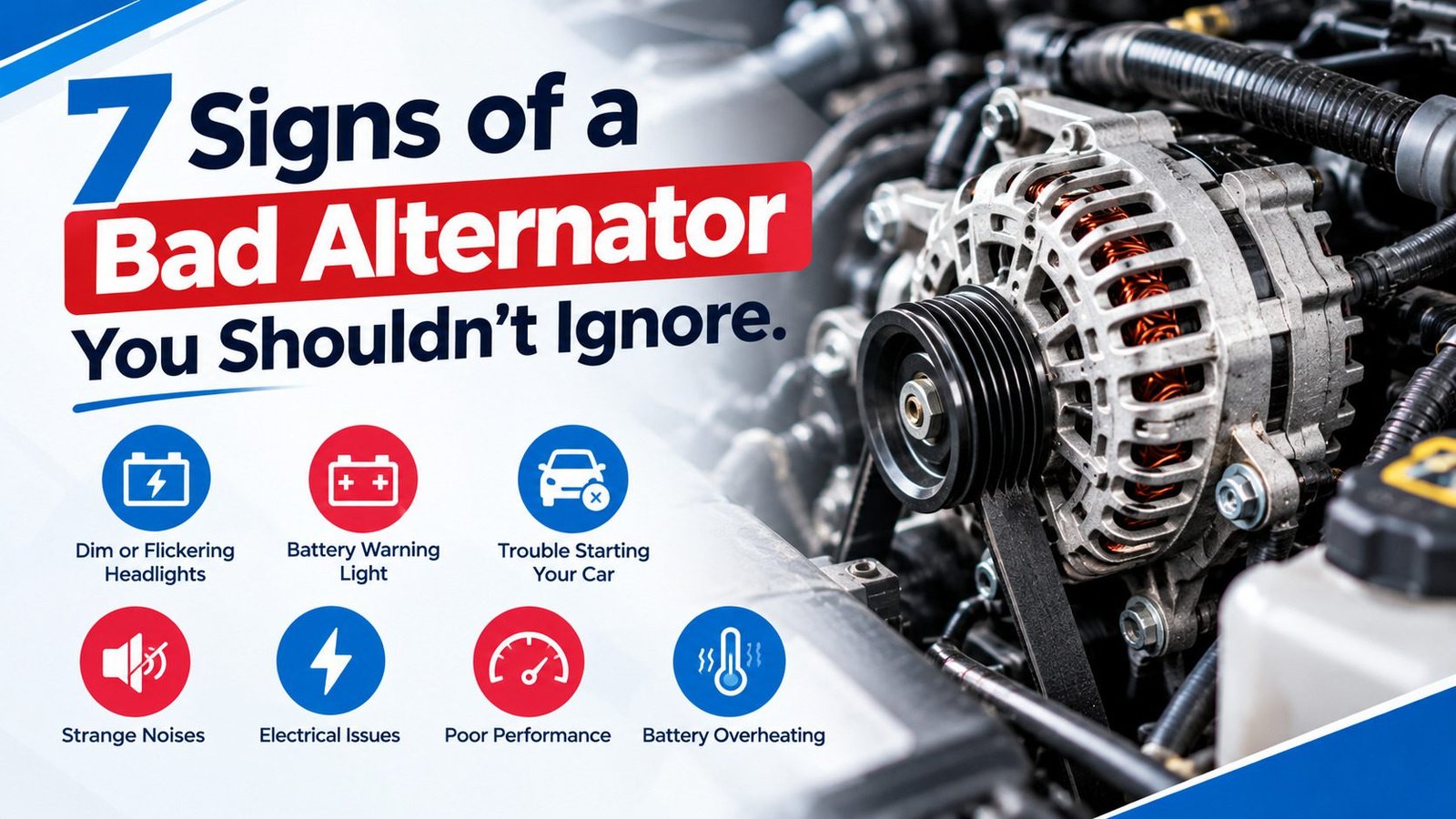
7 Signs of a Bad Alternator
Here are the seven signs that you should never ignore:
1. Dimming or Flickering Lights
Headlights that dim at idle and brighten when you rev the engine point straight at alternator problems. Because the alternator struggles to keep steady voltage flowing, lights fluctuate instead of staying consistent. This is often the very first clue something is wrong under the hood.
Interior lights and dashboard illumination can flicker too, not just headlights. So if you notice any electrical component acting inconsistent, especially while driving at night, it deserves a closer look. Waiting on this sign often means dealing with a bigger issue later.
2. A Dead or Weak Battery
Since the alternator charges the battery while the car runs, a failing alternator often gets mistaken for a battery problem. Drivers replace the battery, only to find the same issue creeping back within days or weeks. That pattern almost always points to the real cause sitting elsewhere.
A battery that constantly needs a jump start, even after replacement, signals that something upstream is not charging it properly. Therefore, checking the alternator before spending money on another battery saves both time and frustration.
Noticing your battery keeps dying no matter how many times you charge it? The team at Claymont Auto can run a quick diagnostic and find the real cause.
3. Trouble Starting the Car Intermittently
A weak alternator sometimes causes the car to start fine one moment and struggle the next, without any clear pattern.
Because the battery never gets a full, steady charge, it holds just enough power to start sometimes and not other times. This inconsistency confuses a lot of drivers, since it does not match the usual signs of a dead battery.
Turning the key and hearing a slow, sluggish crank one morning, then a normal start the next day, points toward this kind of intermittent charging problem. So, if starting trouble comes and goes rather than happening every time, the alternator deserves a closer look before you blame the battery.
4. Strange Noises Under the Hood
A bad alternator sometimes announces itself through sound before anything else. Grinding, whining, or growling noises from the front of the engine often mean worn bearings inside the alternator. As these bearings wear down further, the noise usually gets louder and more frequent.
Belt related sounds can point here too. A squealing noise, especially when starting the car or turning on accessories like the air conditioning, sometimes traces back to a struggling alternator pulley rather than the belt itself. Because these noises tend to escalate, getting them checked early prevents a full breakdown.
5. Electrical Issues Throughout the Car
Power windows moving slower than usual, radio static, or a dashboard warning light flickering on and off all point toward inconsistent electrical output. Since nearly every system in a modern car relies on steady voltage, alternator trouble tends to show up in unexpected places first.
Some drivers notice their car radio cutting out briefly or dashboard gauges acting strange during acceleration. These small glitches often get dismissed as minor annoyances, but they usually signal a charging system struggling to keep up with demand.
6. Battery Warning Light on Your Dashboard
Most cars display a small battery-shaped warning light on the dashboard when there is a problem with the charging system. While a failing alternator is one possible cause, the issue could also involve the battery, wiring, drive belt, or other charging-system components. Ignoring the warning could eventually leave the vehicle without enough electrical power to keep running, so it should be checked promptly.
7. Burning Smell or Stalling Engine
A burning rubber smell sometimes comes from a slipping alternator belt working too hard against a failing pulley. Because friction builds up under strain, this smell often shows up right before a belt snaps completely, leaving the car without any charging power at all.
Stalling presents the most serious warning sign on this list. Once the battery drains completely because the alternator stopped charging it, the engine can shut off entirely, sometimes while driving. This creates a genuinely dangerous situation, especially in traffic or on a highway.
What to Do If You Notice These Signs
Seeing any combination of these seven signs? Do not wait until your car stalls out completely. Schedule a diagnostic with Claymont Auto and catch the problem before it strands you somewhere inconvenient.
Catching alternator trouble early almost always costs less than dealing with a full breakdown later. A proper diagnostic test measures actual voltage output, which confirms whether the alternator is the real problem or something else is at play. Guessing based on symptoms alone sometimes leads to replacing the wrong part.
Professional auto repair Claymont DE services test the charging system properly and pin down the exact issue before recommending anything. That saves you money compared to swapping parts on a guess, and it gets you back on the road with real confidence.
Regular car repair and maintenance checkups also catch early alternator wear before it turns into a roadside emergency.
A quick inspection during routine service often spots a weakening alternator months before it fails completely, giving you time to plan the repair on your own schedule.
Final Thoughts
A bad alternator rarely fails without warning, even though the signs sometimes get blamed on other parts of the car. Dimming lights, a weak battery, strange noises, and electrical glitches all point toward the same underlying issue. Catching these signs early keeps you off the side of the road and out of an expensive emergency repair.
Claymont Auto diagnoses and fixes alternator problems quickly, backed by years of experience with every make and model. Visit claymontauto.com or stop by the shop today and keep your car’s electrical system running the way it should.