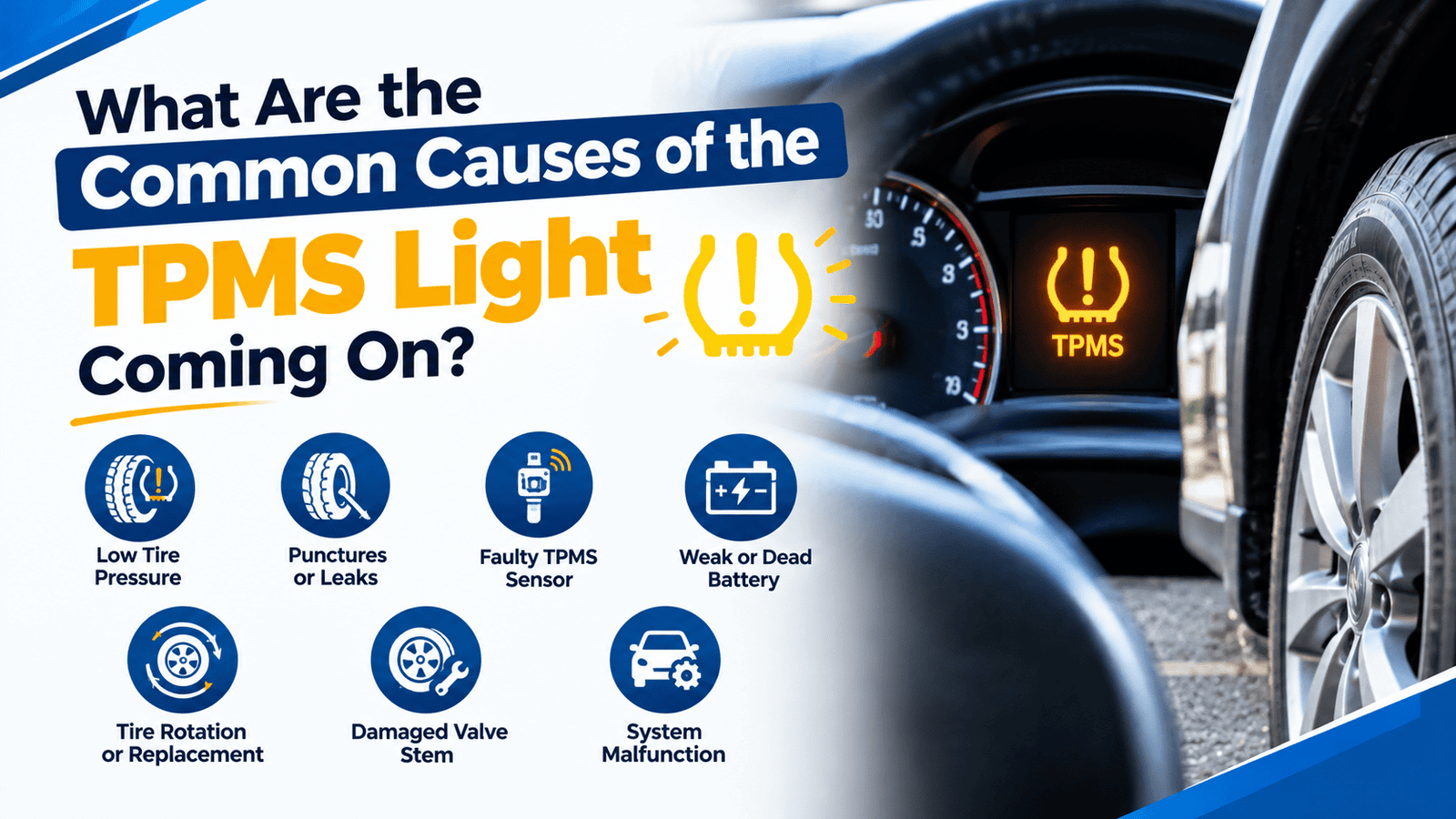
That little orange horseshoe icon on your dashboard rarely shows up at a convenient time, but ignoring it almost always costs more than checking it right away.
A TPMS light warns you about a real problem with your tires, not some random glitch in the system. Understanding what triggers it helps you respond correctly instead of guessing what is actually wrong.
Every driver in Claymont deals with this warning eventually, especially as the seasons change and temperatures swing.
This guide walks through the most common reasons that light comes on, what each cause actually means, and when a quick fix at home is enough versus when a trip to the shop makes more sense.
What the TPMS Light Actually Means
Before troubleshooting the cause, it helps to understand what the system does in the first place. TPMS stands for tire pressure monitoring system, and it tracks air pressure in each tire using small sensors.
When pressure drops below a safe range, the tire pressure light turns on to warn the driver immediately. Because tires naturally lose a small amount of air over time, this light often points to something simple and fixable.
However, it can also signal a more serious issue depending on how quickly the pressure dropped and whether one tire or several triggered the warning. Therefore, treating the light as useful information rather than a nuisance saves a lot of headaches down the road.
Most 2008 model-year and newer vehicles come equipped with this system because TPMS became a federal requirement for applicable new passenger vehicles in the U.S. beginning with the 2008 model year. If your car has this warning light, checking tire pressure regularly should be part of normal vehicle maintenance.
Common Causes Behind the TPMS Light
Temperature changes rank among the most frequent triggers for this warning. Cold weather causes air inside tires to contract, which drops pressure enough to set off the light.
As a result, many drivers see this warning constantly during the first cold snap of the season, even without any actual tire damage.
A slow leak is another common cause worth checking early. Nails, small punctures, or a damaged valve stem can all cause gradual air loss over days or weeks.
Consequently, a tire that looked fine last week might trigger the light today simply because a slow leak finally dropped pressure below the threshold.
Sometimes the sensor itself causes the problem rather than the tire. TPMS sensors run on small batteries that eventually wear out, typically after five to ten years of use.
Once a sensor battery dies, it stops transmitting readings, which can trigger the light even when tire pressure is completely normal.
Improper inflation after a routine tire change also triggers this warning often. If a shop fills tires slightly under or over the recommended pressure, the system catches that discrepancy right away.
Therefore, always double-checking pressure after any tire service prevents this easily avoidable trigger. Wondering if your light points to a quick fix or something bigger?
The team at Claymont Auto can check your tires and sensors in one visit.
When a Damaged Sensor Needs Replacement
TPMS sensors sit inside each wheel and take a beating from road debris, potholes, and general wear over the years.
A cracked or corroded sensor sometimes fails completely, sending no signal at all instead of an inaccurate one. In this case, the light stays on constantly until the sensor gets replaced, since the system cannot confirm safe pressure readings without it.
How to Respond When the Light Comes On
Grab a gauge first and check actual tire pressure. That is the simplest place to start. Compare the reading against the sticker inside your driver door, since that number tells you what your tires actually need.
If all four tires read low, cold weather is probably the cause. A simple top-off usually takes care of it. But if just one tire keeps losing air, that points toward a slow leak instead.
Look the tire over for visible punctures. A small leak sometimes hides well enough that you need a shop to find it.
A proper inspection catches these hidden issues before they turn into a flat on the highway. Ignoring the light for too long means driving on unsafe pressure, and that is not worth the risk. Underinflated tires wear unevenly, burn more fuel, and raise your odds of a blowout at speed.
Taking the warning seriously now beats dealing with a bigger problem later. If the light keeps coming back, professional auto repair Claymont DE services can track down the exact cause fast.
A shop with the right diagnostic tools tells you whether it is the tire, the sensor, or something else, instead of leaving you to guess.
Ready to get that warning light checked out properly? Schedule a visit with Claymont Auto and get back to driving with confidence.
Final Thoughts
A TPMS light rarely comes on without reason, even when the cause turns out to be something simple like cold weather.
Knowing these common triggers, from temperature swings to slow leaks and failing sensors, helps you respond the right way instead of ignoring a real safety warning. Staying on top of this small detail protects your tires and keeps you safer on the road.
Claymont Auto handles thorough car repair and maintenance for drivers throughout the area, including fast and accurate TPMS diagnostics. Visit claymontauto.com or stop by the shop and get that warning light resolved before it turns into something bigger.