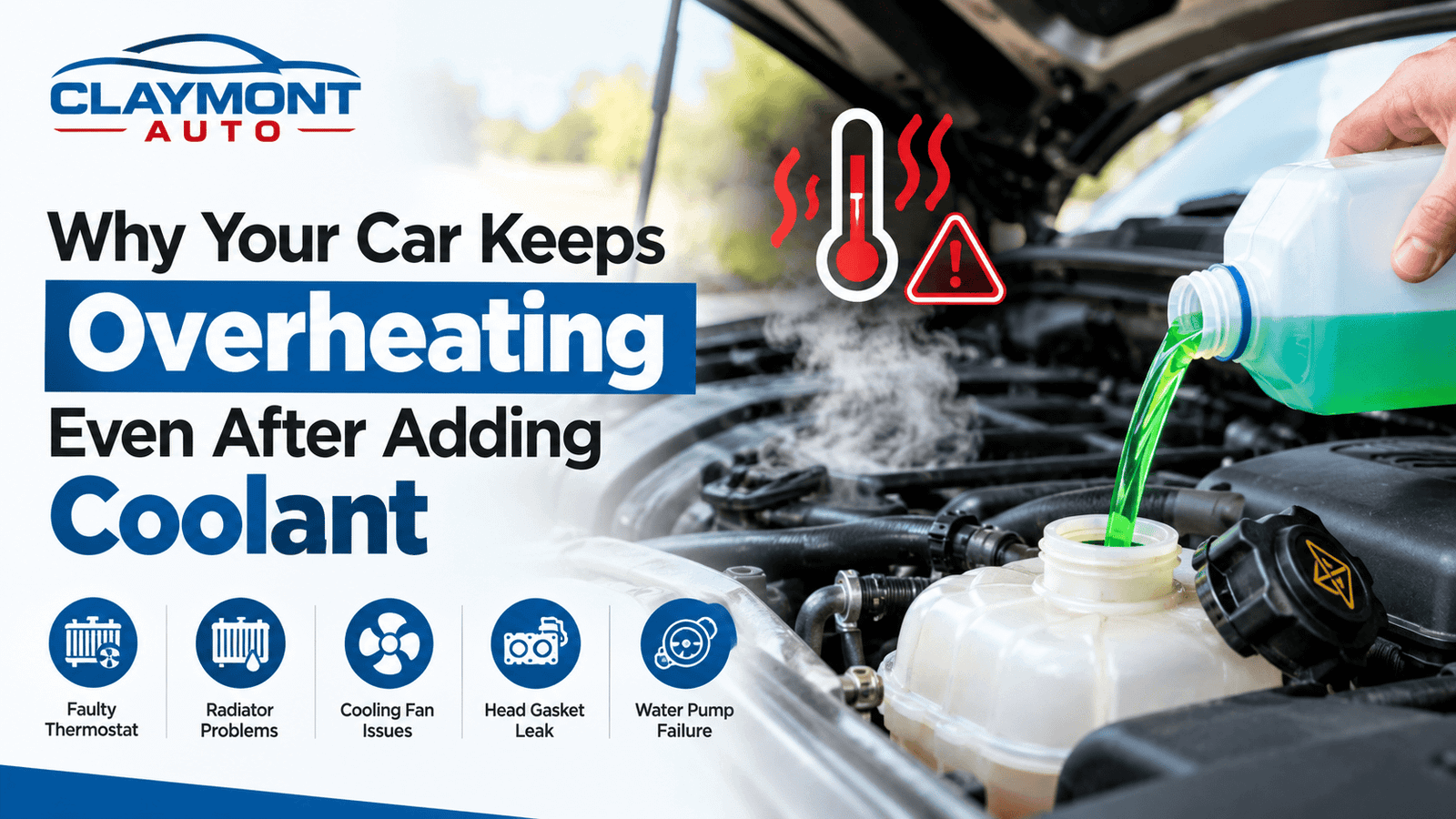
Adding coolant treats the symptom, not the cause, and that is why your temperature gauge keeps climbing. Many drivers face car overheating after adding coolant and feel stuck.
However, a full reservoir does not guarantee a healthy cooling system. In fact, a hidden fault often sits behind the problem.
The guide explains the most common causes, the warning signs, and how to fix overheating car permanently. Moreover, you will learn when to call a professional.
Why Car Overheating After Adding Coolant Still Happens
Coolant only works when it moves. Therefore, low fluid is rarely the full story. Usually, something blocks the flow or fails to push it through the engine.
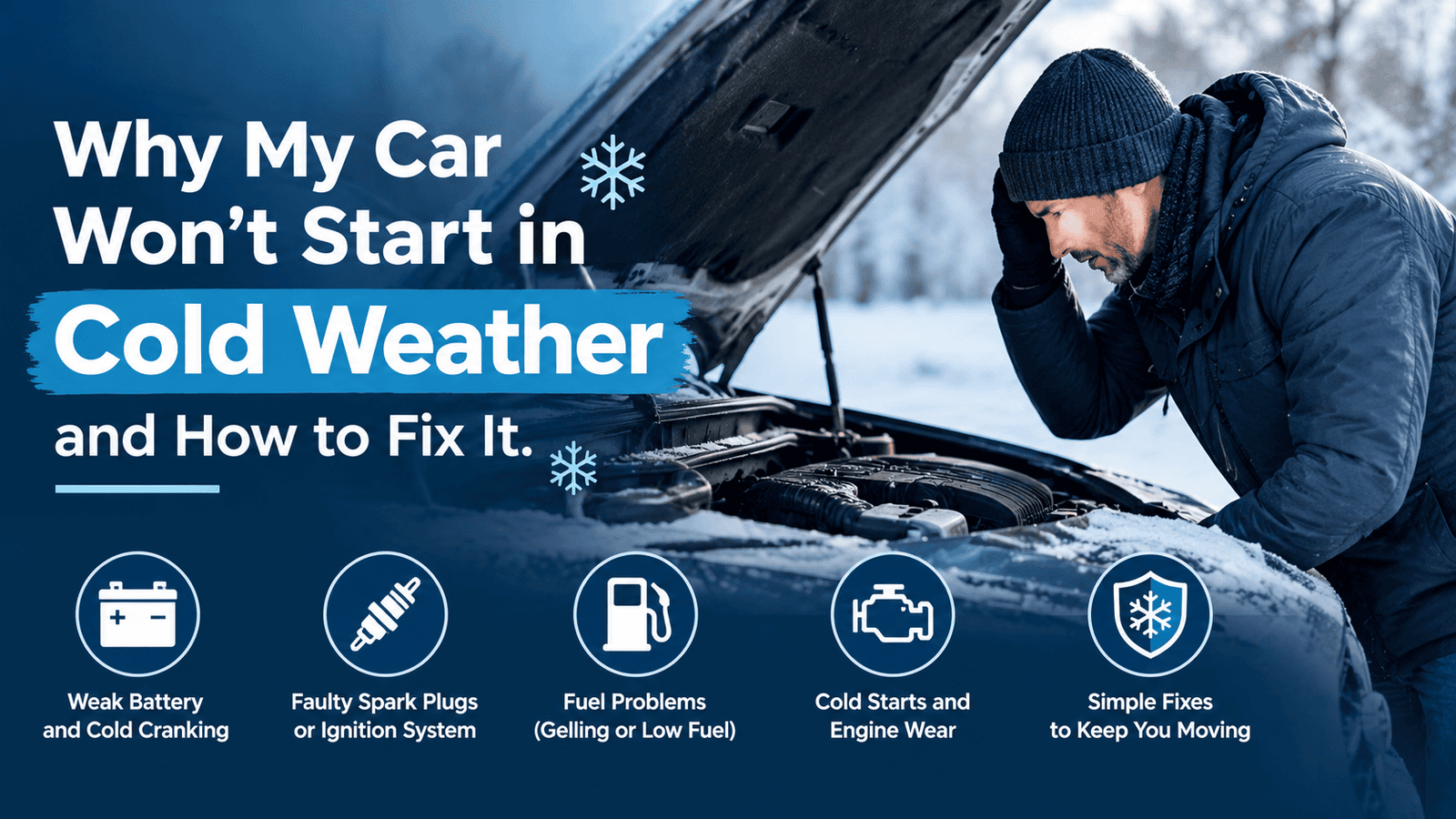
Air pockets cause many repeat problems. After a refill, air often hides inside the cooling system. As a result, hot spots form near the engine, and the gauge spikes. Bleeding the system removes that air.
Leaks come next. Coolant can escape through old hoses, a cracked radiator, or a bad head gasket. Consequently, the level drops again within days. Watch for puddles under the car, white exhaust smoke, or a sweet smell.
A stuck thermostat also causes trouble. This small valve controls when coolant reaches the radiator. If it stays closed, hot fluid stays in the engine. Because of that, the temperature rises fast, even with a full tank.
Other common causes include the following.
- A clogged radiator that blocks airflow and fluid flow
- A weak radiator cap that cannot hold pressure
- A broken cooling fan that fails to cool the radiator
- A wrong coolant mix that lowers the boiling point
Additionally, mixing different coolant types can create sludge. That sludge clogs narrow passages and traps heat. Most cars need a 50/50 mix of coolant and distilled water, so check your owner’s manual for the exact type.
Warning Signs of a Failing Water Pump and Idle Overheating
The water pump moves coolant through the engine. When it fails, heat builds quickly. Fortunately, a bad pump gives clear warnings.
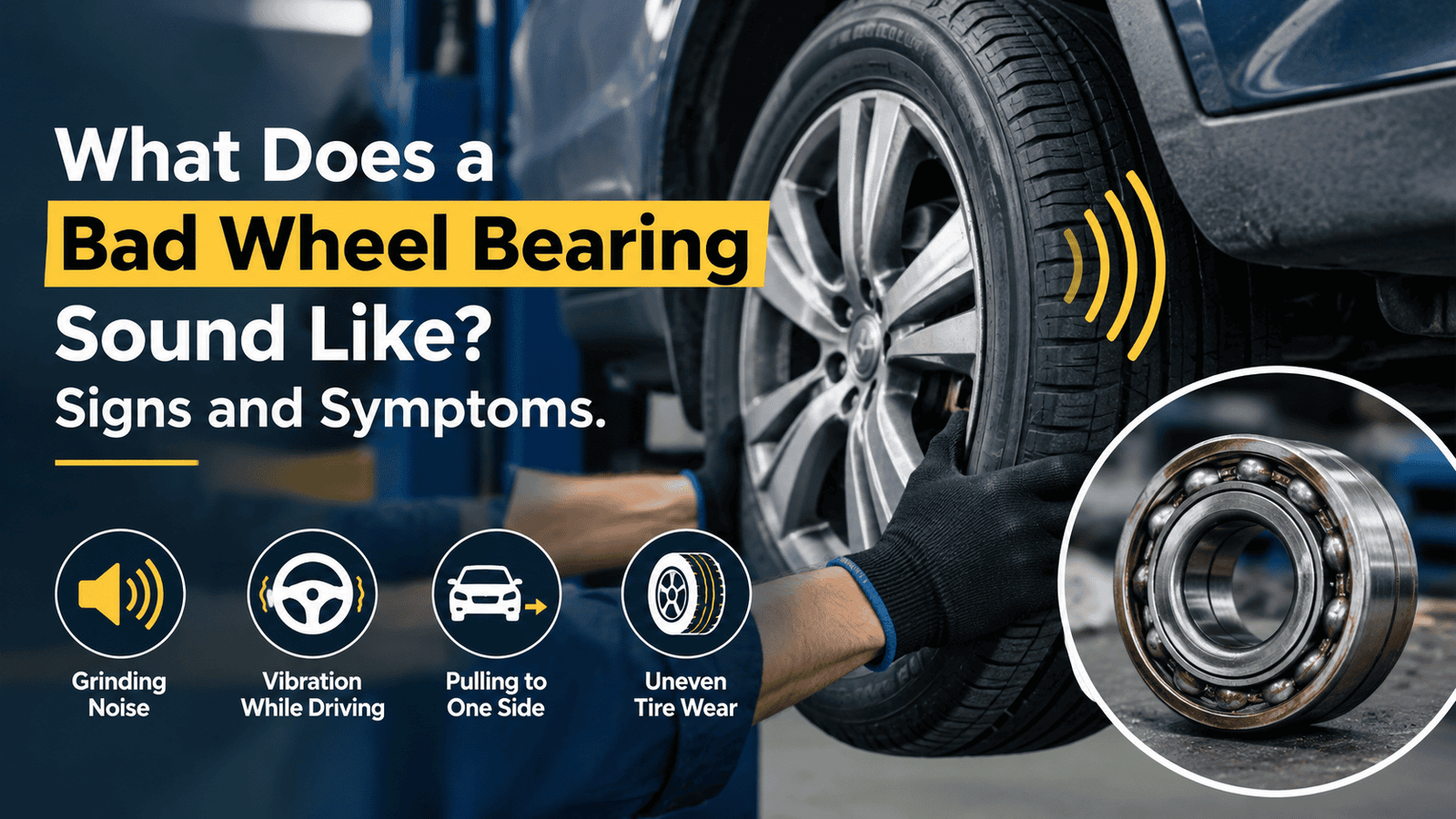
First, look for coolant drips near the front of the engine. Next, listen for a whining or grinding noise that rises with engine speed. Also, watch for steam under the hood and a gauge that climbs without reason. A wobbling pulley is another red flag. Because the pump often sits behind the drive belt, a shop can test it with simple tools.
Now consider the car that overheats at idle but cools down on the road. This pattern points to airflow trouble. At highway speed, the wind pushes air through the radiator. At a red light, the fan must do that job alone.
Therefore, a weak fan, a bad fan relay, or a clogged radiator shows up at idle first. Likewise, a tired water pump moves less fluid at low engine speed. Low coolant can cause the same pattern. Never ignore it, because repeated overheating can warp the cylinder head and wreck the engine.
How to Fix an Overheating Car Permanently
A quick top-off only buys time. Instead, follow a clear plan to solve the cause. These steps show how to fix overheating car permanently.
First, stop driving as soon as the gauge hits the red zone. Then turn off the engine and wait at least 30 minutes. Never open the radiator cap on a hot engine, because scalding fluid can spray out.
Second, check the coolant level and look for visible leaks. Then inspect the hoses, the belt, and the fan. Besides that, check the oil cap for a milky film, which can signal a head gasket leak.
Third, run a pressure test. This test finds small leaks that the eye cannot see. Similarly, a thermostat test and a fan test reveal hidden failures. Most home garages lack these tools, so a pro often saves time and money.
Fourth, replace the failed part. Common fixes include a new thermostat, a new water pump, a fresh radiator, or a new cap. After that, flush the entire system and refill it with the right coolant. Finally, bleed the air so the fluid flows freely.
Regular car repair and maintenance keep the problem from returning. Many makers suggest a coolant flush every 30,000 to 60,000 miles. In addition, check hoses and belts at every oil change. As a result, you catch small issues before they strand you on the road.
If you live near Delaware, a trusted auto repair shop Claymont DE can handle every step above. The team at Claymont Auto offers full cooling system checks and honest advice. Book your visit at claymontauto.com today and stop the overheating for good.
Frequently Asked Questions
Why is my car overheating even though the coolant is full?
A full reservoir does not prove the coolant moves. A stuck thermostat, a bad water pump, a clogged radiator, or a broken fan can still trap heat. In addition, air pockets or a head gasket leak can cause the same problem.
How do you know if a water pump is failing?
Look for coolant leaks near the front engine site and listen for a whining noise. Moreover, watch for steam, a wobbling pulley, and a rising temperature gauge. A mechanic can confirm the fault with a quick pressure test.
Why does my car overheat when idling but not while driving?
At idle, the engine gets less natural airflow. Therefore, the cooling fan must work harder. A weak fan, a clogged radiator, or a tired water pump often causes this pattern.
Final Thoughts
Overheating rarely fixes itself, and extra coolant seldom solves it. Instead, the real cause usually hides in a part that fails to move or cool the fluid.
Therefore, act early, test the system, and replace the faulty part. Consistent care also protects your engine and your budget. Furthermore, a professional inspection gives you peace of mind on every drive.
If your temperature gauge keeps rising, let the experts at Claymont auto repair, DE, find the real cause. Visit claymontauto.com to schedule your cooling system check today.