A steady hum that grows louder with speed rarely comes from the road. Most often, it comes from a worn bearing inside your wheel hub. Many drivers ignore a humming noise from car for weeks.
However, small noises turn into big repairs fast. This guide explains the bad wheel bearing sound, the other warning signs, and the steps to confirm the problem. Moreover, you will learn what to do next.
What a Bad Wheel Bearing Sounds Like
Wheel bearings let your wheels spin with very little friction. Each bearing sits inside a sealed hub and holds a thick layer of grease. Over time, dirt, water, and heat break down that grease. As a result, the metal parts grind together and create wheel bearing noise.
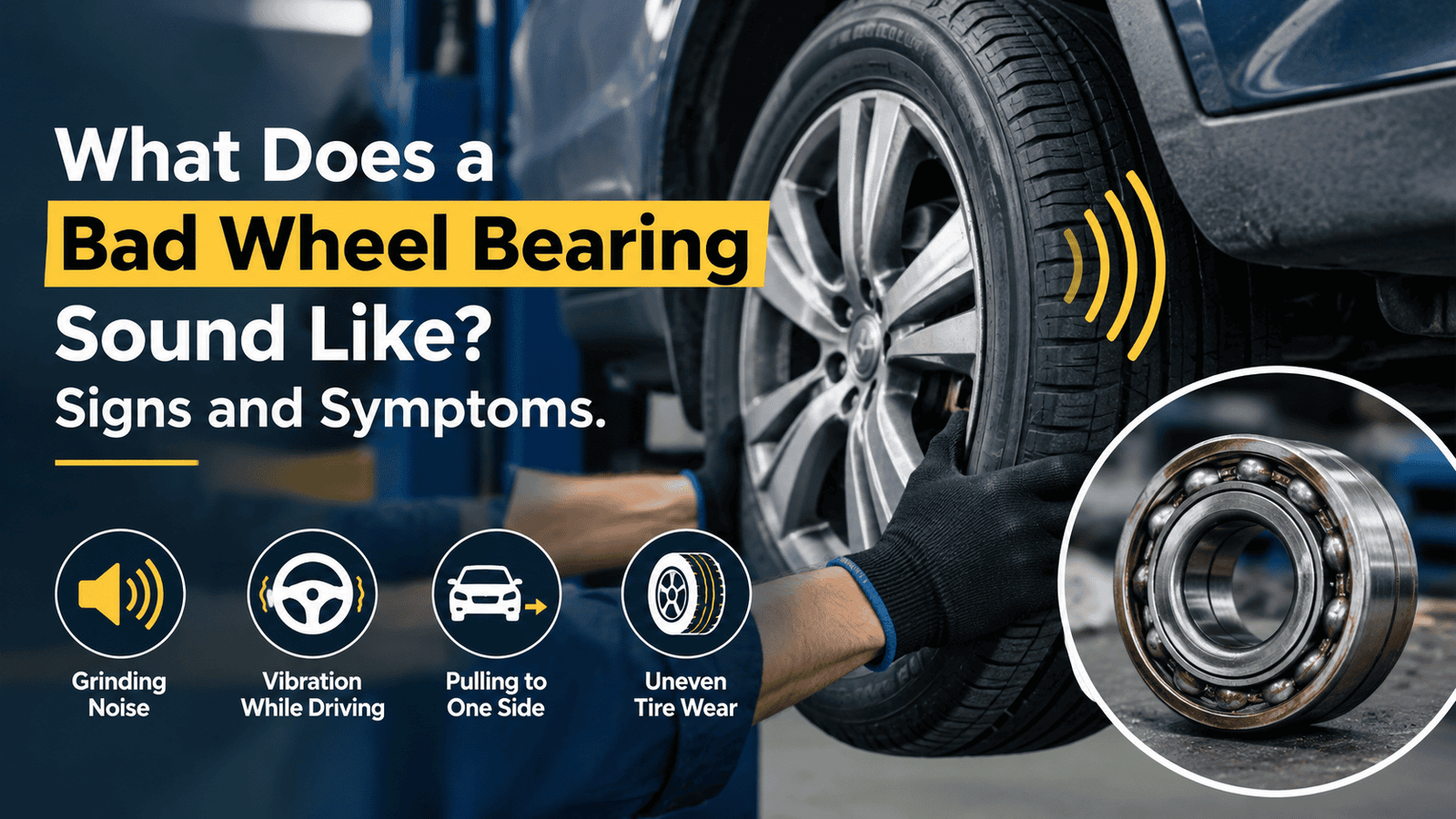
The most common bad wheel bearing sound is a low hum or growl. It often starts around 30 mph. Then it grows louder as you speed up. Because the noise follows your road speed and not your engine revs, you can separate it from engine trouble.
As the damage grows, the sound changes. A hum turns into a rumble, and later into a harsh grinding or clicking.
Additionally, the noise often shifts when you turn. For example, a right bearing usually gets louder on a left turn because the weight moves onto it. A left bearing does the opposite. This simple clue helps you narrow down the side.
Tires can make a similar sound. Cupped or uneven tires also hum. However, tire noise usually stays the same during turns, while bearing noise changes. Therefore, pay close attention to how the sound shifts on curves.
Other Symptoms of a Bad Wheel Bearing
Noise rarely shows up alone. Several bad wheel bearing symptoms appear as the part wears out. Watch for these signs.
- Vibration in the steering wheel or floor that grows with speed
- Loose or wandering steering
- A car that pulls to one side
- Uneven or cupped tire wear
- An ABS or traction control warning light
- A wheel that wobbles when you shake it
The ABS light surprises many people. Yet it makes sense, because the wheel speed sensor often sits inside the hub. When the bearing wears, it throws the sensor reading off. Consequently, the warning light turns on.
Furthermore, the symptoms of a bad wheel bearing get worse the longer you wait. Heat builds inside the hub, and the play grows.
In the worst case, the hub locks up or separates from the car. This risk is called wheel bearing failure, and it can cause a serious crash. Treat early signs as a real warning.
How to Diagnose a Bad Wheel Bearing and Find the Side
You do not need a full shop to start. A few simple checks give you strong clues. First, take a safe road test on a quiet street. Listen for the hum at different speeds. Then weave gently left and right.
If the noise grows when you turn one way, the bearing on the opposite side likely has the problem. Next, try a hands-on test. Park on level ground and set the parking brake. Lift the suspect wheel with a jack and place a jack stand under the car.
Never work under a car that rests on a jack alone. Then grab the tire at the top and bottom and try to rock it. Any clunk or play points to a worn bearing.
After that, spin the wheel by hand. A healthy bearing spins smoothly and quietly. A bad one feels rough, sounds gritty, or grinds. Also, put a hand near the hub and feel the vibration. Many shops use a mechanic’s stethoscope to pinpoint the noise even more clearly.
Of course, a pro can confirm the fault faster and more safely. Not sure which wheel makes the noise? Book a diagnosis at claymontauto.com, and the team will find the exact bearing.
Can You Drive With a Bad Bearing, and What Does the Fix Involve?
You can drive a short distance, but you should not wait. A worn bearing gets hotter and looser with every mile. Moreover, it can damage the hub, the brake parts, and the axle.
In rare cases, the wheel can lock or come off at speed. Therefore, schedule a repair as soon as you hear the noise.
Wheel bearing replacement usually takes a mechanic one to two hours per wheel. Some cars use a press-in bearing, while many newer cars use a full hub assembly. The shop will remove the wheel, brake parts, and old hub.
Then they install the new part and tighten everything to the right torque. After that, they test-drive the car to confirm the noise is gone.
Replacing one side is common. Besides that, many mechanics suggest checking the opposite side, because both bearings face the same wear. Cost varies by vehicle, so ask for a clear quote first.
Regular car repair and maintenance also help you avoid sudden failure. Avoid deep potholes and curbs when you can. Additionally, ask your mechanic to check for play and noise during tire rotations. Early catches cost far less than a tow and a hub repair.
If you live near Delaware, Claymont Auto Repair DE handles bearing checks and replacements with honest advice. Call or visit claymontauto.com to get started.
Frequently Asked Questions
How can I tell which wheel bearing is bad?
Start with a road test and listen for how the noise changes in turns. A noise that grows on a left turn usually points to the right side. Then jack up the wheel and check for play or a rough spin. A shop can confirm the exact wheel with a stethoscope.
Can you drive with a bad wheel bearing?
You can drive a short distance, but the risk grows each mile. The bearing can overheat, damage other parts, or even lock the wheel. Therefore, avoid highway trips and book a repair right away.
How do you diagnose a bad wheel bearing?
Listen for a hum that rises with speed, and note any change during turns. Next, lift the wheel and rock it by hand to check for play. Also, spin the wheel and feel for grinding. A mechanic can then confirm the fault with proper tools.
Final Thoughts
A bad bearing rarely fixes itself. Instead, the hum grows, the vibration builds, and the risk rises with every mile. However, you can avoid most of the damage if you act early. Listen for changes in sound, watch for warning lights, and check for play at the wheel.
Furthermore, a quick professional inspection gives you a clear answer and a safe drive. Fix the problem now, and you protect both your car and your passengers.
If that hum keeps getting louder, let Claymont Auto Repair DE inspect your wheels and find the real cause. Visit claymontauto.com to schedule your wheel bearing check today.