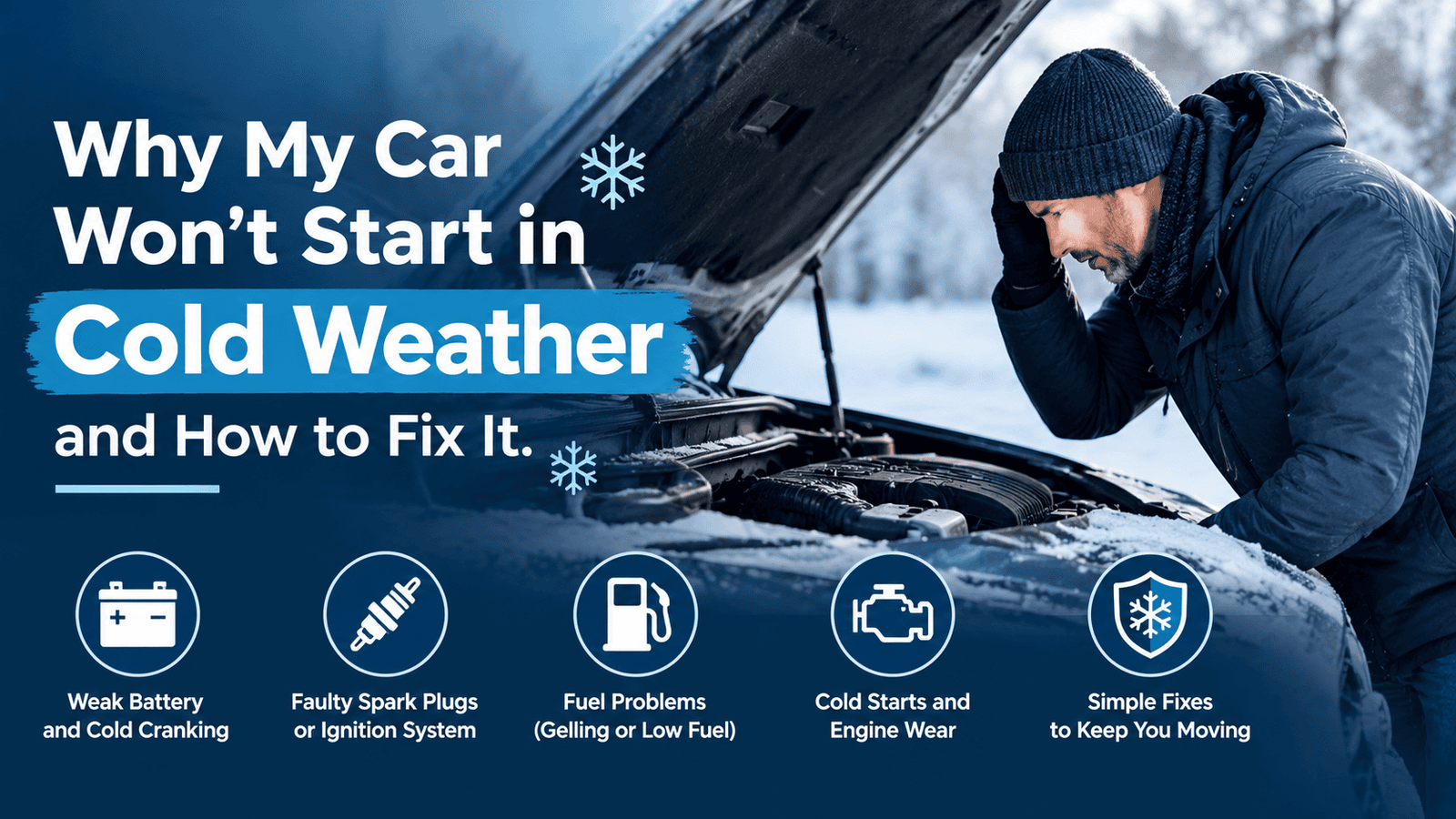
Cold air thickens your oil, weakens your battery, and turns a simple key turn into a gamble. When your car won’t start in cold weather, the cause usually falls into three groups.
These groups are power, fuel, and spark. However, each one has its own warning signs. This guide explains the common causes, shows you quick fixes, and tells you when to call a pro. Moreover, you will learn why some engines crank but still refuse to fire.
Why Cold Weather Stops Your Engine
Cold weather strains every part of your engine at once. First, your battery loses strength. A battery can lose over a third of its power at freezing, and it loses even more near zero. Consequently, it struggles to turn the engine.
Next, your engine oil thickens. Thick oil makes every moving part harder to turn. Therefore, the starter pulls more power from a battery that already feels weak.
Fuel also causes trouble. Gasoline turns to vapor slowly in the cold, so the engine needs a richer mix to fire. As a result, water in the fuel line can freeze and block the flow. Diesel can gel and clog the filter. Additionally, a weak fuel pump or a dirty filter shows its flaws on freezing mornings.
Other common culprits include these parts:
- Corroded battery terminals that block current
- Worn spark plugs that fire weakly
- A tired starter motor that clicks but fails to spin
- An old alternator that never charges the battery fully
- A dead key fob battery that confuses the security system
What to Check When the Battery Is Good or the Engine Cranks
Many drivers say their car won’t start in cold but battery is good. In that case, listen closely to the sound. The sound tells you where to look.
A fast-clicking noise usually points to a weak battery or a loose cable. A single loud click often means a bad starter or relay. Meanwhile, a slow and heavy crank suggests thick oil or low battery power. A normal crank with no firing points to a fuel or spark problem.
That last sound matches another common complaint. Your car won’t start in cold weather but cranks, yet the engine never catches. Here, the starter and battery work fine. Instead, the engine lacks fuel, spark, or the right sensor signals.
A frozen fuel line, a failed fuel pump, or a clogged filter can starve the engine. Likewise, worn plugs or a weak ignition coil can leave the spark too faint.
A faulty coolant temperature sensor also causes trouble. It tells the computer the engine is warm when it is not. As a result, the engine gets too little fuel.
Flooding adds another risk. Long cranking pumps extra fuel into the cylinders, and then the plugs get wet and cannot spark. Therefore, never crank for more than ten seconds at a time.
How to Fix It and Prevent It
If your car refuses to start on a freezing morning, stay calm and follow these steps:
- Turn off the lights, heater, and radio first.
- Turn the key for no more than ten seconds.
- Wait a full minute, then try again.
- Check the battery terminals for white or green crust.
- Jump-start the car with a safe set of cables if the battery seems weak.
Besides that, never pour hot water on a frozen part. Sudden heat can crack metal and glass.
Prevention costs far less than a tow. Test your battery before winter starts. Switch to the oil grade your owner’s manual recommends for cold climates. Keep the fuel tank at least half full to limit moisture.
Furthermore, park in a garage when you can, and use a block heater in very cold areas. Regular car repair and maintenance catch weak batteries, dirty filters, and worn plugs before they fail.
Many people also want to know how to warm up a car faster. Let the engine idle for 30 to 60 seconds. Then drive gently for the first few minutes.
An engine warms up faster under light load than it does at idle. Meanwhile, avoid hard acceleration until the temperature gauge starts to move. A remote starter or block heater also helps.
Still stuck? Book a diagnosis with the team at Claymont Auto Repair DE at claymontauto.com. They will find the real cause fast.
Frequently Asked Questions
What should I do if my car won’t start on a cold morning?
Turn off all accessories first. Then try short cranks of ten seconds with a one-minute rest in between. Check the battery terminals and try a jump start if the battery seems weak. If the engine still fails, call a mechanic before you drain the battery.
Why won’t my car start in cold weather but the battery is good?
A good battery does not guarantee a good start. Thick oil, a worn starter, a weak fuel pump, or old spark plugs can still block the process. In addition, a bad sensor can upset the fuel mix. A shop can test each part and find the exact fault.
Why does my car crank but not start in cold weather?
The engine turns, so the battery and starter likely work. Therefore, the missing piece is usually fuel or spark. A frozen fuel line, a clogged filter, a weak coil, or a faulty sensor often causes this problem.
How to warm up a car faster?
Start the engine and let it idle for about a minute. Then drive gently until the gauge reaches its normal spot. Moreover, a block heater or remote starter shortens the wait on freezing days.
Final Thoughts
Cold starts expose weak parts. A tired battery, thick oil, or a dirty fuel filter often hides until the first freeze. However, you can avoid most problems with simple habits. Test your battery early, use the right oil, and keep your fuel tank fairly full.
Furthermore, listen to the sounds your car makes, because they point straight to the cause. Act quickly when something feels off, and you will protect both your schedule and your engine.
If winter keeps leaving you stranded, let Claymont Auto Repair DE inspect your battery, starter, and fuel system. Visit claymontauto.com to schedule your cold weather check today.