Your radiator keeps your engine from cooking itself, so even a small leak can grow into a huge bill. Many owners of older cars face a tough choice between radiator replacement and radiator repair.
Both options work, but each one fits a different situation. Therefore, this guide compares them side by side. You will learn the warning signs, the real costs, and the factors that point to the best choice for your car.
Signs Your Car Radiator Needs Replacement
Your car gives clear hints before the radiator fails. Learning the signs your car radiator needs replacement helps you act early. Watch for these problems.
- Coolant puddles appear under the front of the car.
- The temperature gauge climbs higher than normal.
- Steam rises from under the hood.
- Rust, flakes, or sludge float in the coolant.
- Radiator fins look bent, crusty, or corroded.
- The coolant level keeps dropping for no clear reason.
An overheating car is the most urgent warning. Pull over as soon as the gauge nears the red zone. Otherwise, you risk serious engine damage. Also, let the engine cool fully before you open the radiator cap, because hot coolant can burn you badly.
In addition, check the hoses and the radiator cap. A weak cap or a soft hose can mimic radiator trouble. Even so, a mechanic should confirm the real cause with a pressure test. This quick test finds leaks that your eyes cannot see.
Replace or Rebuild? How to Decide
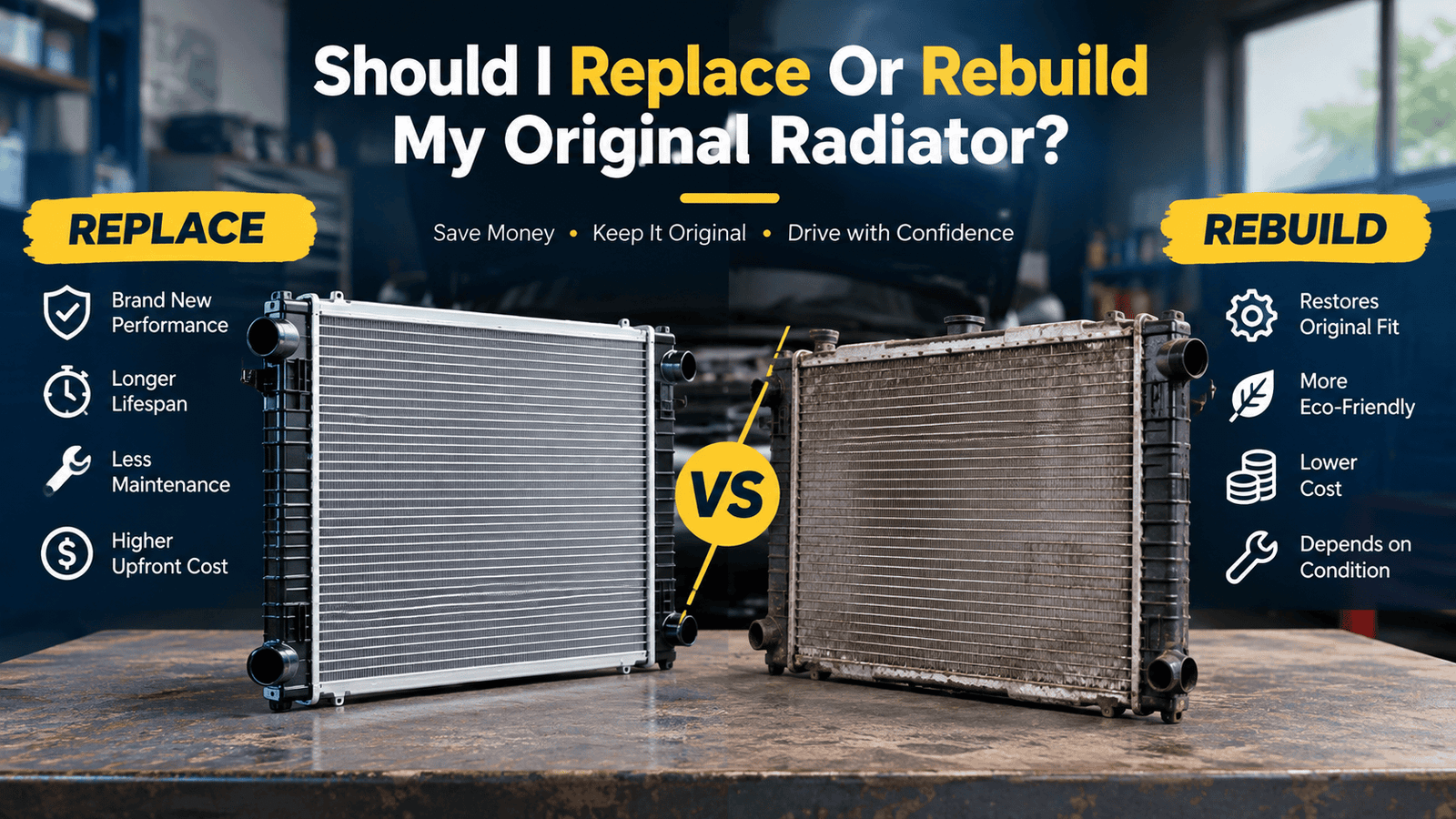
Now comes the big question. A shop can patch a small leak, clean clogged tubes, or re-core an older unit. Meanwhile, a full replacement gives you a brand-new radiator. Age, damage, and budget decide which path works best.
Radiator repair makes sense in these cases:
- The leak is small and sits at a hose connection or seam.
- The radiator is metal and has only light damage.
- The core is clean and the car is fairly new.
- You plan to sell the car soon.
Replacement makes more sense in these cases:
- The plastic tanks have cracks.
- Corrosion has eaten through the core.
- Many tubes are clogged beyond cleaning.
- The radiator is more than ten years old.
- You have already repaired it more than once.
Classic cars deserve a special note. Many older vehicles carry original copper and brass radiators. A skilled shop can rebuild or re-core these units, and that keeps the factory fit and look.
In contrast, modern cars use aluminum cores with plastic tanks. These rarely rebuild well, so replacement usually wins.
Be careful with quick fixes too. Stop-leak additives may seal a crack for a short time. However, they can also clog narrow coolant passages and the heater core. As a result, a cheap patch often leads to a bigger repair later.
If you feel unsure, book a radiator inspection with a trusted team for auto repair Claymont, DE. A technician can test the system and give you an honest opinion.
Radiator Cost and Labor Breakdown
Money drives most decisions here, so let us look at the numbers. Radiator cost varies by vehicle, part quality, and shop rates. Still, you can plan with a few solid ranges.
So, how much does a car radiator replacement cost for most drivers? The total usually falls between 300 and 1,200 dollars. Parts often run 150 to 600 dollars. Labor adds another 100 to 300 dollars, because the job takes one to three hours.
Therefore, radiator replacement cost including labor lands near 500 to 900 dollars for many common cars. Luxury cars, trucks, and hybrids cost more.
Repairs cost less up front. Minor fixes, such as a hose swap or a small seam repair, often run 100 to 300 dollars. Moreover, a coolant flush adds a modest fee and gives the new system a clean start.
Many shops also suggest new hoses, a fresh cap, and a thermostat during replacement. These extras add cost, but they prevent repeat visits.
Consider the long view as well. A repair saves cash today. However, repeated repairs can cost more than one solid replacement.
Likewise, a failed radiator can wreck an engine, and engine repair costs thousands. For that reason, many mechanics suggest replacement for old or cracked units.
You can also stretch the life of any radiator. Flush the coolant on the schedule in your owner’s manual. Use the coolant type your carmaker recommends. Finally, fix small leaks right away.
Frequently Asked Questions
How long does a radiator usually last?
Most radiators last eight to ten years. With good care, many last longer. However, hard driving, old coolant, and heat shorten that life.
Can a leaking radiator be repaired instead of replaced?
Sometimes, yes. A small leak in a metal radiator often responds well to repair. In contrast, cracked plastic tanks and badly corroded cores usually need replacement.
What causes a car radiator to crack?
Age, heat, and pressure cause most cracks. Plastic tanks turn brittle over time. In addition, old coolant breeds rust, and road debris can strike the core.
Can a damaged radiator cause engine damage?
Yes, it can. A weak radiator lets the engine overheat. As a result, the head gasket can fail, and the engine can warp or seize.
Conclusion
In short, the best choice depends on age, damage, and long-term cost. Small leaks on newer metal radiators often suit repair.
Meanwhile, old, cracked, or clogged units call for replacement. Above all, never ignore an overheating car, because early action protects your engine and your wallet.
Not sure whether your radiator needs repair or a full swap? Visit Claymont Auto at claymontauto.com for a clear inspection and an honest quote today.