
Ever caught your car sounding a little too loud as you pulled out of the driveway? Maybe there is a rattle underneath that was not there last month.
Problems like these happen more often than drivers realize. They usually point to an issue with the exhaust system.
Most drivers do not pay much attention to the exhaust until a problem becomes impossible to ignore. However, recognizing common exhaust system problems early can save you money and frustration.
Let’s look at what commonly goes wrong, how to recognize it, and what to do next.
The Exhaust System Does More Than You’d Think
Many people assume the exhaust system is only there to keep the car quiet. However, it performs several other important functions.
It moves harmful gases away from the engine and helps control emissions. It can also affect how your car performs from day to day.
When something goes wrong, noise may be only one of the symptoms. Fuel efficiency can drop, and some issues can create a serious safety concern.
That is why car exhaust system issues deserve attention as soon as warning signs appear.
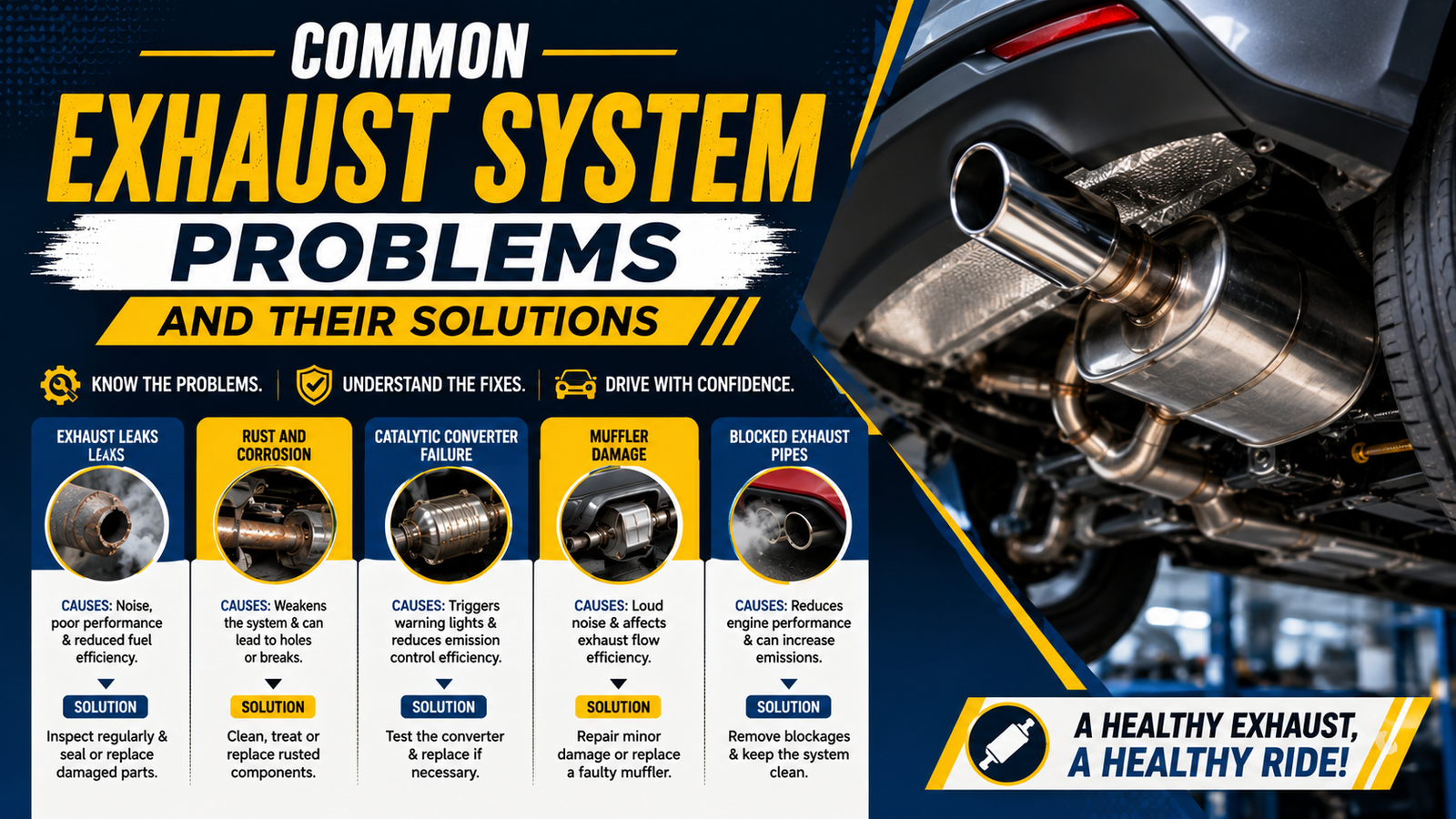
Rust Is Probably the Biggest Culprit
Rust is one of the most common causes of exhaust system damage.
Exhaust pipes sit beneath the vehicle. They are constantly exposed to rain, road salt, moisture, and changing temperatures.
Over time, this exposure weakens the metal and causes small holes to form. Exhaust gases may then escape from places they should not.
You will often hear the problem before you can see it. Drivers in areas with harsh winters and salted roads are especially likely to experience exhaust rust.
Clamps and Connections Come Loose Over Time
An exhaust system is not one solid piece. It consists of several sections held together by clamps, bolts, and hangers.
Constant vibration can cause these components to loosen over time.
When a connection comes loose, you may hear a rattling or clanking sound. The noise may become more noticeable when driving over bumps or rough roads.
The good news is that loose clamps or hangers are often easier to repair than the noise may suggest.
When the Muffler Starts Going
A damaged muffler often becomes noticeable quickly. Your vehicle may suddenly sound much louder than usual.
Rust eats away at mufflers just like it does the rest of the exhaust, and once it’s damaged, things get loud fast.
Some people brush it off since it’s not a huge deal at first, but a failing muffler is often a sign that something else down the line needs attention too.
Catalytic Converter Issues Are the Expensive Ones
The catalytic converter reduces harmful emissions before exhaust gases leave the vehicle. However, it can become clogged, damaged, or less effective over time.
You may notice that your vehicle feels sluggish or uses more fuel than usual. A smell similar to rotten eggs can also indicate a catalytic converter problem.
Catalytic converter replacement can be one of the more expensive exhaust repairs. That makes early diagnosis especially important.
Watching Out for Warning Signs
There are a handful of signs of exhaust system problems that are worth keeping an eye on.
Loud or unusual noises, a strange smell inside the car, noticeable vibrations while driving, or a sudden dip in fuel efficiency are all red flags.
If the check engine light comes on around the same time as any of these, it’s a good idea to have it checked sooner rather than later.
How to Fix Exhaust Problems
The right way to fix exhaust problems depends on the cause and extent of the damage.
Sometimes, the solution is as simple as tightening a clamp or repairing a small rust spot. A severely corroded pipe may require replacement.
A failing catalytic converter may also need a more extensive exhaust system repair.
A temporary patch may cost less initially. However, it may only delay a more complete repair.
A professional inspection can help determine whether a repair or replacement is the better option.
FAQs
What are the most common exhaust system problems?
Rust, loose connections, damaged mufflers, and catalytic converter trouble top the list. Most of these build up slowly over time, which is exactly why regular checks make such a big difference.
How do I know if my car’s exhaust system needs repair?
Keep an ear out for strange noises, watch for smells inside the cabin, and pay attention if your fuel efficiency drops or you feel unusual vibrations while driving. Any of these are worth getting checked out.
Can I drive with a damaged exhaust system?
You can for a short while, but it’s really not something to put off. A damaged exhaust can let harmful gases sneak into the cabin, and the longer it sits unfixed, the more expensive the repair tends to get.
Final Thoughts
Exhaust problems often develop gradually. Eventually, the noise or change in performance becomes difficult to ignore.
Catching small problems early can save money and help keep your vehicle running properly.
If you are unsure what is causing the problem, the team at Claymont Auto Repair can inspect the exhaust system and recommend the right solution.