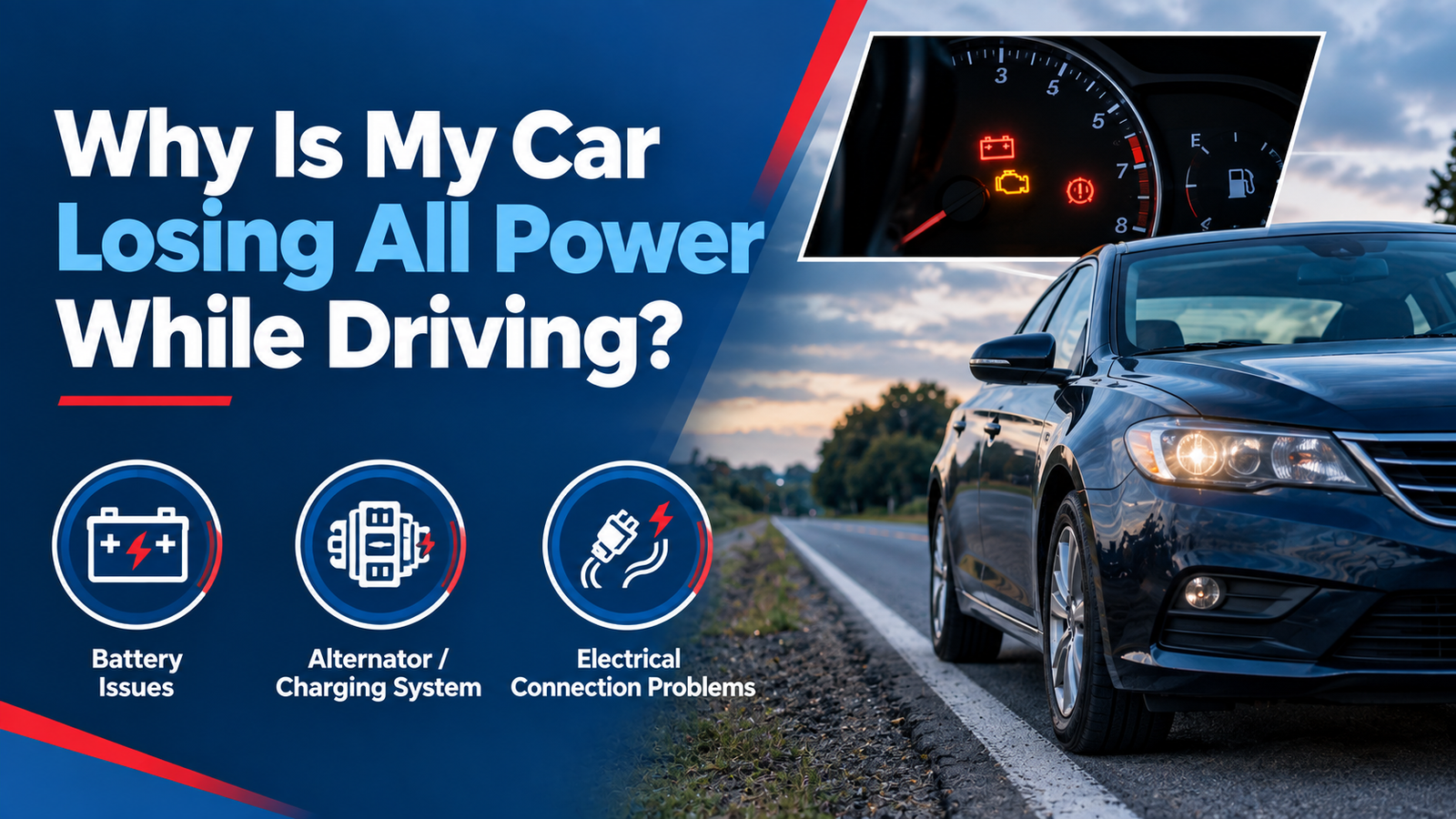
You’re driving, nothing seems off, and then the car just weakens. You press the gas, and it barely responds. Maybe it even shudders a bit. It’s a scary few seconds, especially if you’re in traffic or merging onto a highway when it happens.
If you’ve dealt with this, here’s some comfort: a car losing power is more common than you’d think, and it’s almost never something that happens for no reason. There’s usually a specific cause, and once you know what to look for, it’s a lot less scary.
What’s Going On Under the Hood
Your engine relies on the right balance of air, fuel, ignition, and properly functioning electronic and mechanical components. Problems in any of these areas can contribute to a loss of engine power.
Think of it like jogging while breathing through a small straw. You’re still getting air, just not enough to keep your normal pace. Your engine slows down for a similar reason; something is holding back what it needs to perform.
What Usually Causes It
A clogged air filter is one of the easier problems to miss. Dust builds up over months, and a clogged filter can restrict airflow to the engine and contribute to reduced performance.
Fuel delivery issues tend to be more serious. A weak fuel pump or a filter that’s clogged with buildup means your engine may not be getting fuel at the pressure it needs. You may notice this during acceleration, when the engine needs more fuel.
Sensor trouble throws a lot of people off because it feels random. Cars today rely on several sensors, and faulty sensors, including the mass airflow or throttle position sensor, can affect engine performance. In some vehicles, certain faults may also trigger a reduced-power mode to help protect the vehicle.
Overheating plays a role too. Overheating can cause reduced engine performance, and some vehicles may limit power when certain temperature-related faults are detected.
And transmission problems shouldn’t be ruled out. Sometimes the engine may be producing power normally, but a slipping or malfunctioning transmission can prevent that power from being transferred effectively to the wheels.
Why It Feels So Sudden
A lot of drivers ask why a car suddenly loses power with no warning beforehand. A car can suddenly lose power for several reasons, including fuel-delivery problems, ignition faults, overheating, sensor problems, or transmission issues. Some vehicles may also enter a reduced-power mode when the computer detects certain faults.
It’s Not Always the Engine
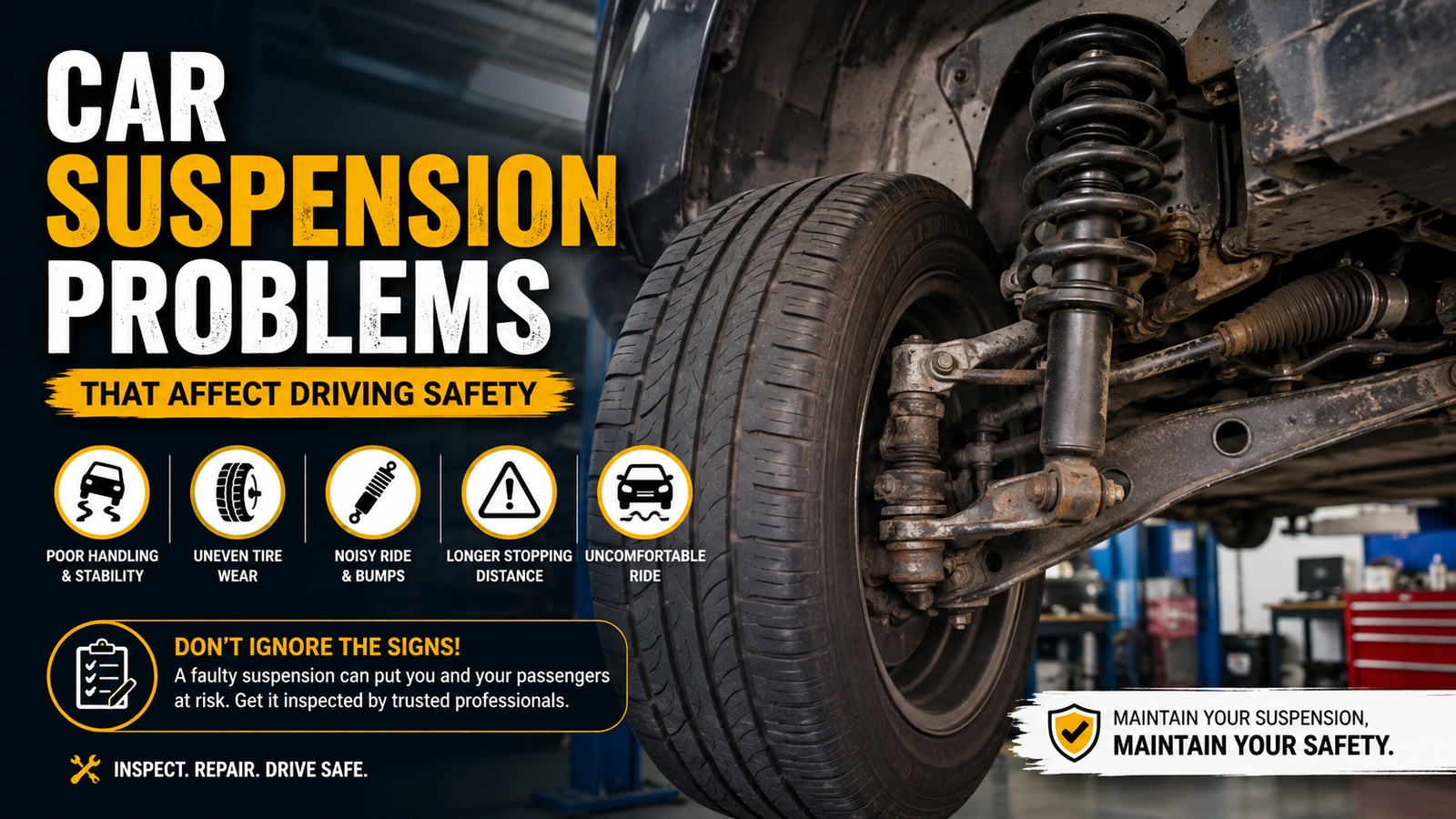
Worth mentioning: car suspension problems can affect ride quality, stability, and handling, but they are generally separate from engine power loss. A complete inspection can help determine whether you’re dealing with one issue or multiple unrelated problems.
Why Regular Checkups Are Worth It
Some problems that affect engine power while driving develop gradually, while others can appear suddenly. That’s the whole point of regular car diagnostics. Diagnostic testing can retrieve fault codes and other information that helps technicians narrow down the cause of a performance problem.
If your car’s been feeling a little off, don’t just wait it out. A good auto repair service team can diagnose the problem and determine the appropriate repair. Catching a developing problem early may help prevent additional damage or more extensive repairs.
FAQs
Why does my car suddenly lose power while driving?
A car can suddenly lose power because of fuel-delivery problems, ignition or sensor faults, overheating, transmission issues, or other mechanical problems. In some vehicles, certain faults may also trigger a reduced-power mode.
Can low fuel pressure cause loss of power?
Yes. Low fuel pressure can cause hesitation, weak acceleration, stalling, or loss of power, especially when the engine is under load.
Is it safe to drive a car that has lost power?
If your car suddenly loses significant power while driving, move to a safe location as soon as possible and avoid continuing to drive until the cause is assessed.
Final Thoughts
Losing power while driving is unsettling, but it rarely happens without a cause. Fuel, sensors, overheating, general wear, there’s usually a real reason behind it. Catching the warning signs early just makes life easier down the road. If your car’s been giving you any of these signals, Claymont Auto is here to help you figure out what’s going on and get you back on the road with some peace of mind.