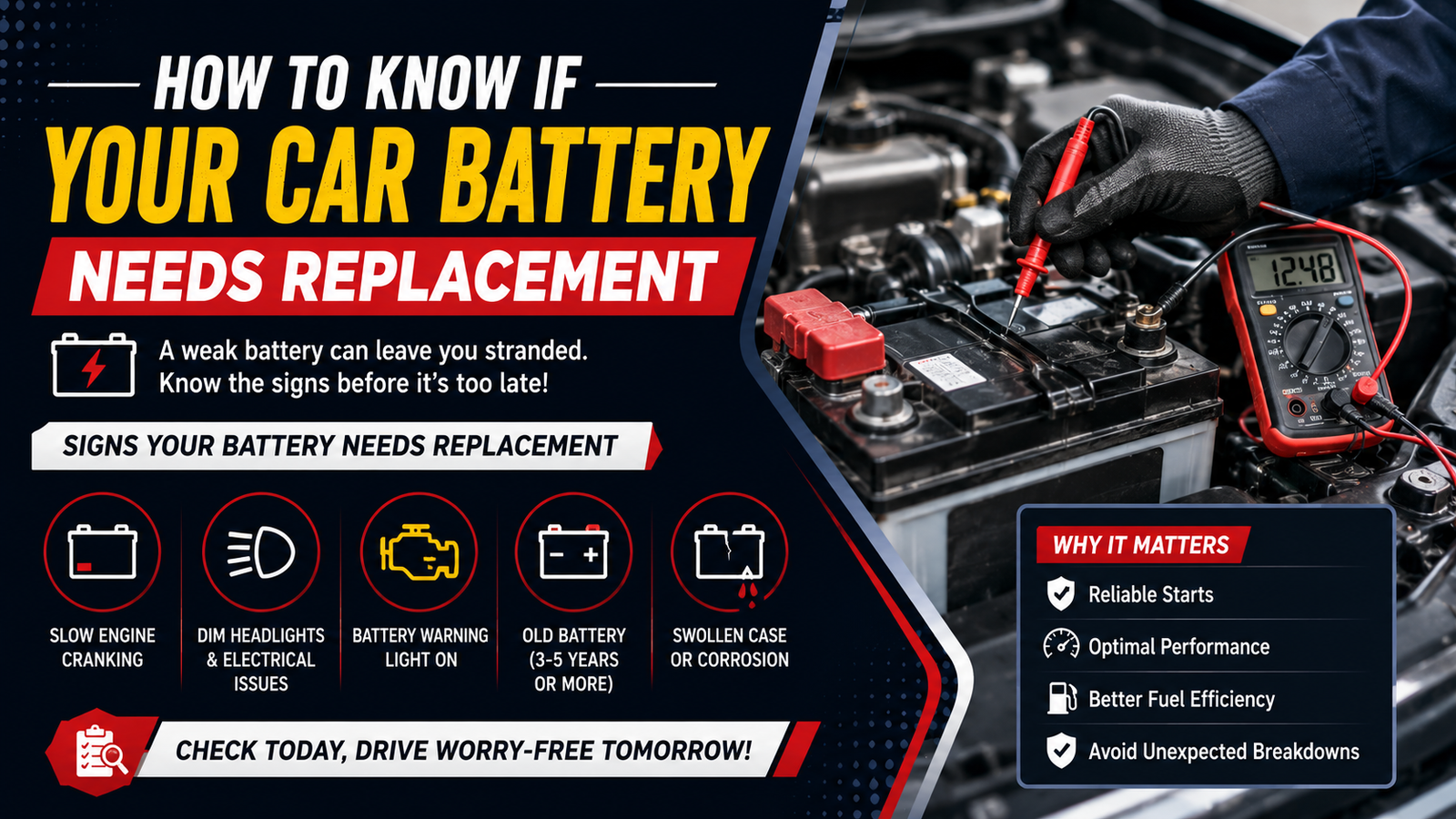
A dead battery rarely gives you a polite warning before it strands you in a parking lot.
AAA points to battery trouble as one of the leading causes of roadside breakdowns. It happens every day, and drivers never see it coming.
Recognizing the signs of a bad car battery early saves you from a surprise no-start morning and protects your schedule.
This guide walks through the warning signs, the average lifespan, and the moment when car battery replacement becomes the smart move.
Common Signs of a Bad Car Battery
A slow engine crank is often the clearest signal that your battery is losing strength.
When you turn the key, the engine should start right away. A sluggish start deserves attention.
Dim headlights or interior lights that flicker at idle can point to weak battery output. A clicking sound when you press the start button often means the battery lacks enough power to engage the starter.
Other Battery Warning Signs
Corrosion around the battery terminals also signals trouble. That white or bluish buildup can interfere with the connection and reduce performance over time.
A swollen or misshapen battery case usually means heat has already caused internal damage. A rotten egg smell near the engine bay may indicate that the battery is failing internally or releasing gas. This needs immediate attention.
These dead car battery symptoms rarely show up all at once. Noticing even one is reason enough to have the battery tested.
When to Replace a Car Battery
Most car batteries last between three and five years. The exact lifespan depends on climate, driving habits, and battery type.
Standard flooded batteries typically last on the shorter end of that range. AGM batteries built for modern electronics may last between four and seven years.
Once your battery passes the three-year mark, it makes sense to start testing it regularly instead of waiting for a failure.
Additionally, hot climates can shorten battery life. Heat speeds up internal corrosion and causes battery fluid to evaporate more quickly.
Frequent short trips under 15 minutes may not give the alternator enough time to fully recharge the battery. As a result, the battery can wear down faster than it would during longer drives.
Leaving the headlights on, running accessories with the engine off, or letting a car sit unused for weeks can also drain the battery faster.
Knowing how to tell if your car battery is bad becomes easier when you track its age along with your daily driving habits.
Why Sudden Battery Failure Still Happens
Even with regular care, a battery can fail without much warning. That catches many drivers off guard.
Repeatedly allowing a lead-acid battery to reach a very low charge can cause permanent internal damage. Charging the battery will not reverse that damage.
A battery that seemed fine last week may refuse to start the car the next morning. A faulty alternator or parasitic electrical drain can also quickly discharge a healthy battery.
Testing your battery every six months after the two-year mark can help catch weak cells before they become a roadside emergency.
Car battery warning signs do not always appear in a predictable order. A proactive test remains one of the most reliable ways to avoid getting stranded.
Getting the Right Replacement
Choosing the correct battery type is just as important as replacing it at the right time.
If your vehicle requires an AGM or EFB battery, installing a basic battery can reduce performance. It may also shorten battery life, even if it fits the tray.
Matching the battery group size and cold cranking amps to your vehicle’s specifications also keeps the electrical system working as designed.
Most technicians recommend a professional load test before replacing the battery. It helps confirm whether the battery or another component is actually causing the problem.
Once testing confirms that the battery is the issue, a correctly sized replacement restores reliable starts and reduces strain on the electrical system.
Frequently Asked Questions
What are the signs that your car battery needs to be replaced?
Slow engine cranking, dim headlights, a clicking sound at startup, and corrosion on the terminals are common warning signs. A swollen battery case or sulfur smell can also mean the battery needs immediate attention.
How long does a typical car battery last?
Car batteries usually last between three and five years. Climate, driving habits, and battery type can all affect that number. Hot weather and frequent short trips often shorten battery life.
Can a car battery suddenly fail without warning?
Yes, a battery can fail suddenly even when it has shown no clear symptoms. Regular testing after the two-year mark can help catch a weak battery before it leaves you stranded.
Final Thoughts
A battery rarely announces its final day in advance. Staying ahead of potential problems can save you time and frustration.
Testing it regularly, watching for warning signs, and replacing it when needed can help keep your vehicle reliable.