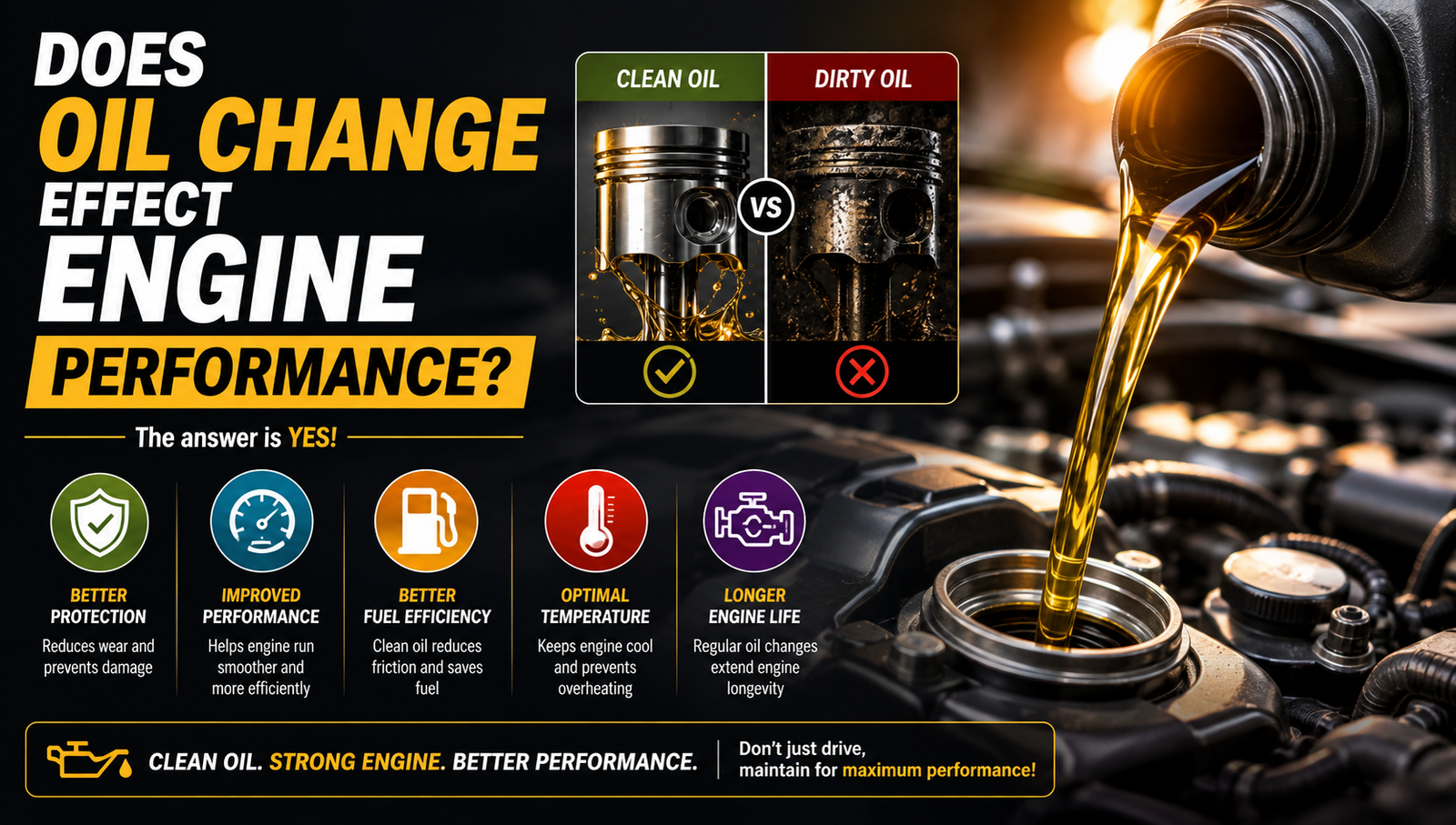
A car running on old, sludgy oil rarely announces the problem right away. The car is not just quietly losing power, but burning more fuel, and soon wears itself down.
Fresh oil keeps every moving part inside your engine gliding smoothly instead of grinding against metal, and that difference shows up in how your car actually drives.
This guide breaks down exactly how an oil change affects engine performance. What happens when you skip one? Why do drivers across Claymont Auto, DE trust regular maintenance to keep their vehicles running strong?
Why Fresh Oil Matters More Than People Think
Engine oil does far more than just lubricate moving parts. It carries heat away from the engine, reduces friction between metal components, and traps dirt and debris that would otherwise scratch and wear down critical surfaces.
Over time, oil breaks down chemically, losing its ability to do any of this effectively. This is exactly why every good set of car maintenance tips includes changing your oil on a regular schedule rather than waiting until problems show up.
Once oil starts breaking down, sludge begins forming inside the engine, clogging small passages that are supposed to keep oil flowing freely.
The buildup forces the engine to work harder just to maintain normal function, and that extra strain translates directly into reduced performance.
So, the decision to change oil in car engines on schedule is not just a manufacturer suggestion, it is a direct mechanical relationship that affects how your car actually runs day to day.
How Dirty Oil Actually Drag Down Performance?
Dirty, degraded oil thickens and loses its lubricating properties, forcing engine components to fight against increased friction with every rotation.
The added resistance robs the engine of power that would otherwise go toward actually moving your car forward.
Drivers often notice sluggish acceleration or a rougher idle long before they think to check their oil, since the symptoms feel vague rather than obviously tied to a specific cause.
Fuel economy takes a hit too, since an engine working harder to overcome internal friction burns more gasoline to produce the same amount of power.
Meanwhile, heat builds up faster in an engine running on old oil, since degraded oil struggles to pull heat away from critical components the way fresh oil does.
Over months of neglect, this combination of friction, heat, and reduced lubrication can shave real horsepower off your engine’s output, even if nothing has technically broken yet.
Choosing The Right Oil And Service For Your Vehicle
Not all oil protects your engine the same way. Picking the best engine oil for cars matters just as much as actually sticking to a schedule.
Similarly, synthetic oil handles extreme temperatures better, holds up longer, and does not break down under heat the way conventional oil tends to.
A lot of newer engines are built with synthetic in mind from the start. When running conventional oil in one of these can quietly cost you the performance the engine was designed to have.
That said, older engines are not always the exception here. Surprisingly, plenty run just fine on conventional oil, and your owner’s manual is really the fastest way to settle that question before assuming synthetic is automatically better.
A shop offering real Delaware oil change service should walk you through this instead of just pushing whatever costs more.
Drivers who stick with solid Delaware auto service long term usually do it because the shop explains things straight, not because every visit turns into an upsell.
Beyond Oil, What Else Affects Overall Engine Health
Oil changes matter a lot, but they are one piece, not the whole picture. Take car battery replacement, something people ignore completely until the car just will not start one morning.
A weak battery makes the alternator and starter work overtime, and that strain does not stay isolated, it works its way back to the engine eventually.
Exhaust system problems cause a similar kind of quiet damage. A clogged catalytic converter or a leaking manifold makes it harder for the engine to push exhaust gases out the way it should. As a result, the engine ends up burning extra effort just to compensate.
Staying on top of oil, battery health, and exhaust system problems together, not one at a time after something breaks, is really what keeps an engine running well for the long haul.
Frequently Asked Questions
Does fresh engine oil improve fuel economy?
Yes. Less friction means the engine is not straining to produce the same power, and that shows up at the pump. Drivers who have gone way past their oil change interval usually notice this difference the most once they finally get it changed.
How does dirty engine oil affect engine performance?
It thickens up and stops lubricating the way it should, so friction between moving parts increases. That is usually what is behind sluggish acceleration, a rougher idle, worse fuel economy, and an engine running hotter than it should.
Can old engine oil reduce horsepower?
It can, yes. Once oil stops cooling and lubricating properly, components have to work harder, and that eats into horsepower. It happens slowly enough that most people do not notice until they switch the oil and immediately feel the car respond better.
Does synthetic oil improve engine performance more than conventional oil?
Usually, especially in extreme heat or cold and in higher-performance engines. Synthetic just holds up longer and resists breaking down. Still worth checking what your specific engine actually calls for before deciding either way.
Keeping Your Engine Running Strong
Here is the bottom line. An oil change looks like busywork on car maintenance tips, but the effect on real engine performance is not subtle once you actually pay attention.
Stick to your schedule, pick the right oil for your engine, and do not ignore the battery or the exhaust just because they are not making noise yet. All of it works together.
Claymont Auto Repair has been handling Delaware auto service for drivers who would rather catch small issues early than pay for big ones later.
If your oil change is overdue, or something has just felt a little off lately, stop by. We will figure out what your engine actually needs, right here at Claymont Auto, DE.