Your engine revs higher, yet the car barely moves forward, and that moment reveals a clear problem with power transfer.
Transmission slipping happens when the unit fails to hold a gear firmly under load. Drivers notice it most during everyday use, and the issue rarely stays mild for long. Understanding the causes and early warnings helps you act before costs climb.
This guide explains the main reasons behind the problem and the practical steps that follow.
Main Causes Behind Transmission Slipping
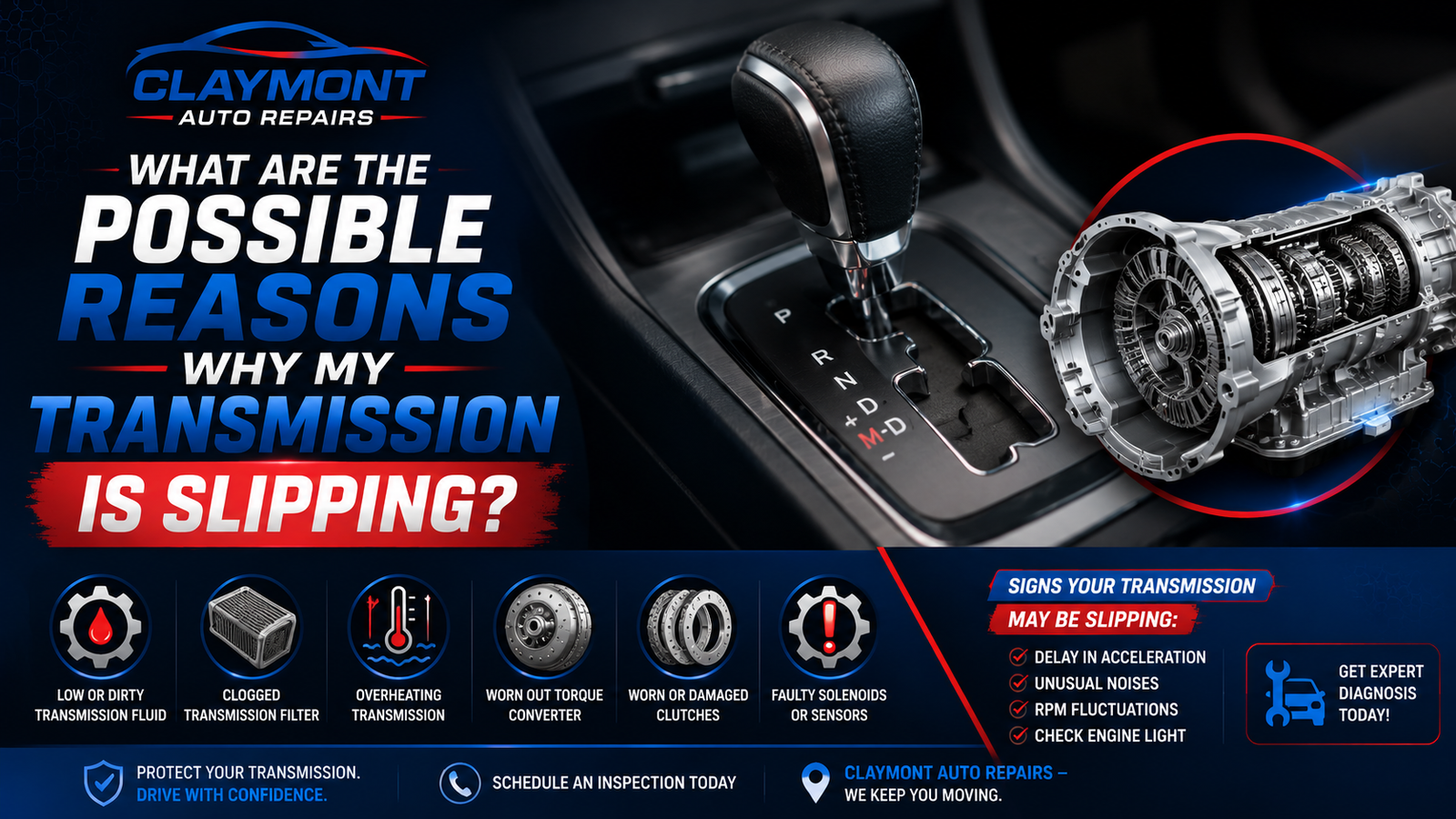
Low fluid ranks as the top reason for transmission slipping. Automatic units rely on fluid pressure to clamp clutch packs and bands.
A leak at the pan gasket, cooler lines, or seals drops the level, and pressure falls. The gears then lose grip, and the engine spins freely.
Old or burnt fluid creates the same effect. Heat and age break down the additives that allow proper friction. Dark fluid that smells burnt can no longer maintain the needed pressure. The wrong fluid type also leads to poor shifts from the first mile.
A clogged filter restricts flow and starves the pump. Debris builds up over time and mimics the symptoms of low fluid.
Worn clutch packs and bands form another common source. These friction parts grip the gears inside an automatic transmission. Mileage and heat thin the material until it can no longer hold under load. Transmission slipping when accelerating often points straight to this wear.
Failing solenoids or a sticky valve body misdirect fluid pressure. Modern transmissions use electronic valves to time each shift. When one sticks, the wrong clutch receives pressure and the gear slips.
Torque converter trouble can also appear. This part links the engine to the transmission. Internal wear reduces efficient power transfer and creates a slip feel, especially under load.
Overheating speeds every form of damage. Heavy towing stop-and-go-traffic, or a blocked cooler raises temperatures and thins the fluid further.
Regular fluid checks and timely service stop many of these issues before they start. Schedule a diagnostic visit at the first hint of trouble so the repair stays simple.
Recognizing the Signs of a Slipping Transmission
Clear signs of a slipping transmission appear in daily driving. The engine RPM climbs without a matching rise in road speed. You press the gas and the tachometer jumps, yet the car lags.
Delayed engagement shows up when you shift into drive or reverse. The car sits for a second or two before it moves. Harsh or late shifts often follow, and the transmission may hunt between gears on level roads.
A burning smell signals overheated fluid or friction material. Unusual noises such as whining or clunking during shifts add further evidence. The check engine light or a transmission warning lamp may also turn on.
Why is my transmission slipping becomes obvious once these symptoms combine. Early notice lets a technician catch the problem while fluid service or a solenoid swap still solves it.
Safety Risks and How to Fix a Slipping Transmission
Is a slipping transmission serious? Yes, and continued driving raises the stakes. Each slip generates extra heat that wears clutches and seals faster. Sudden power loss during a merge or pass creates real danger. Unpredictable gear changes reduce control in traffic.
Limit driving to the shortest safe trip to a shop. Severe cases with burning smells, grinding, or total loss of gear call for a tow instead.
How to fix a slipping transmission starts with a fluid level and condition check. Topping off the correct fluid and repairing any leak often restores smooth operation when caught early. A full fluid and filter service removes burnt material and restores pressure.
Technicians next scan for solenoid or sensor codes. Replacing a faulty solenoid or cleaning the valve body returns proper pressure routing. Band adjustments on older units can regain grip without a full teardown.
Worn clutch packs or a damaged torque converter require deeper work. A rebuild or replacement then becomes necessary. Professional diagnosis confirms the exact cause before any major repair begins.
Act quickly, and you often avoid the higher cost of a complete rebuild. Contact a trusted shop today for a thorough inspection and clear estimate.
Frequently Asked Questions
What are the most common causes of a slipping transmission?
Low or burnt fluid, worn clutch packs, failing solenoids, and clogged filters top the list. Leaks and overheating also play frequent roles in automatic transmission slipping.
How do I know if my transmission is slipping?
Watch for rising RPM without matching speed, delayed engagement, harsh shifts, and a burning smell. These form the classic signs of a slipping transmission.
Is it safe to drive with a slipping transmission?
Mild cases allow a short, careful trip to the shop. Stronger slipping with noise or smell makes driving unsafe and risks total failure.
Parting Thoughts
Early attention keeps most cases manageable and protects both safety and budget. Regular maintenance further reduces the chance of sudden failure.
Claymont Auto Repair provides skilled diagnosis and reliable repairs for every stage of transmission trouble. Visit Claymont Auto or call now to restore smooth power delivery to your vehicle.