A used tire can save you serious money or put you in danger, and the difference comes down to what you know before you buy.
New tires cost anywhere from $80 to $300 each, depending on size and brand. For a car that needs all four replaced, that bill adds up fast. Used tires typically run 25% to 75% cheaper than new ones. That kind of saving makes sense when the tire is genuinely still good. It makes no sense at all when the tire has hidden damage, is of a dangerous age, or has worn tread that will not last another season.
Before you search for affordable used tires near me or walk into a tire repair shop, there are specific things worth knowing. This guide covers all of them.
Start With Tread Depth
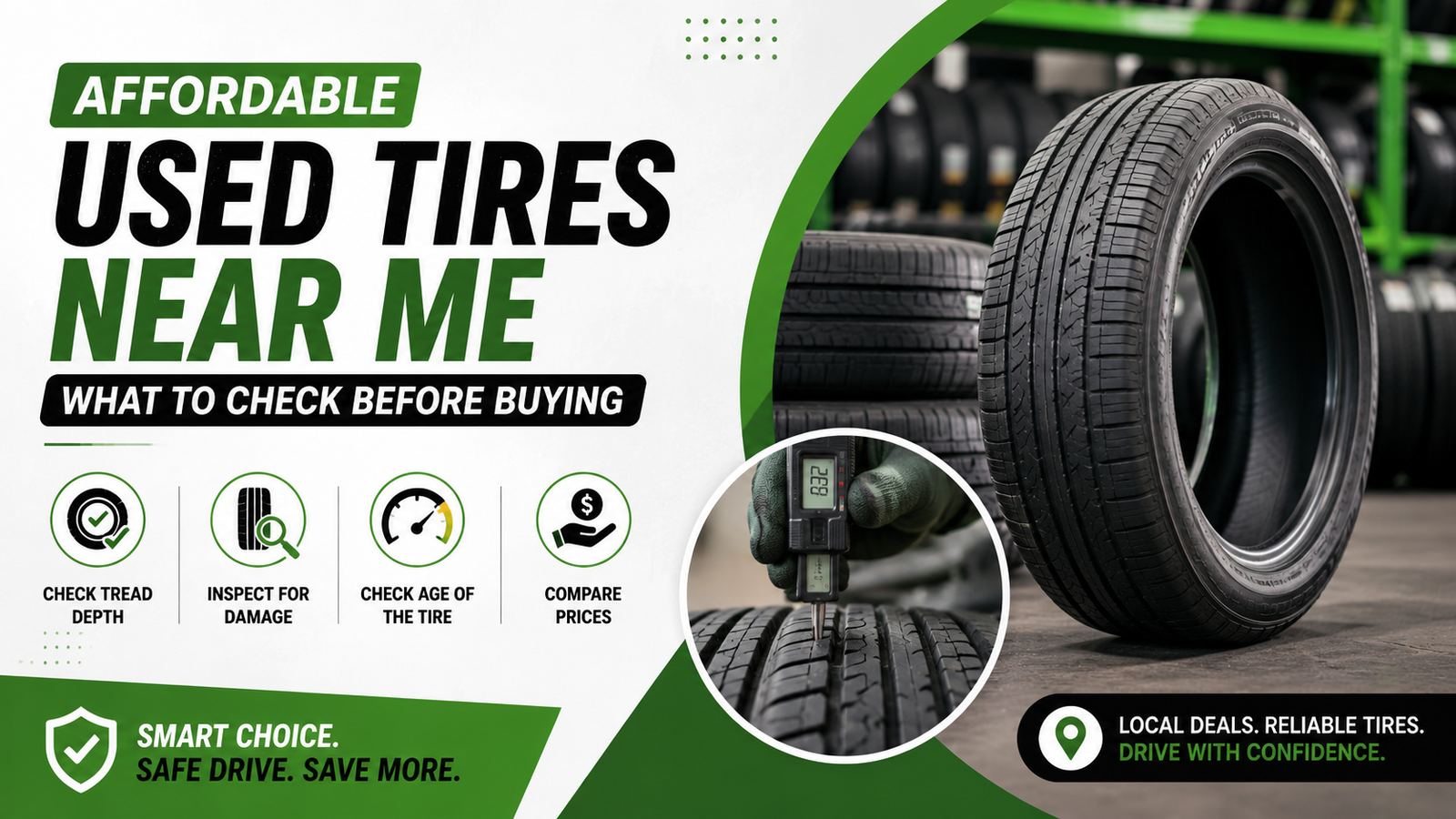
Tread depth is the first number you need. It tells you how much life the tire actually has left and whether it is worth buying at all.
New tires start with a tread depth of roughly 10/32 to 11/32 of an inch. The legal minimum in the US is 2/32 of an inch. At that point, the tire is technically still legal but genuinely unsafe, especially in wet weather. The grooves that channel water away from the contact patch become too shallow to work properly. Hydroplaning risk goes up sharply once tread drops below 4/32.
When you look at cheap used tires, aim for at least 6/32 of an inch remaining. At 6/32, a used tire still has meaningful life ahead of it. At 4/32, you are buying a tire that will need replacing soon. Anything at or below 3/32 is not worth your money, regardless of the price.
The quarter test works well for a quick check. Stick a quarter into the tread groove with George Washington’s head pointing down. If you see the top of his head, the tread sits around 4/32 or less. Move up to the penny test for the legal minimum. Stick Lincoln in head-down, and if you see his entire head, the tire hits 2/32 and should not go on your car.
A tread depth gauge costs around $5 at any auto parts store and gives you an exact reading. If you plan to buy used tires with any regularity, it is worth having one.
Read the DOT Code for the Tire’s Age
Tread depth only tells you part of the story. Tire rubber breaks down with age, even when a tire still looks fine from a distance.
Every tire sold in the US carries a DOT code on the sidewall. The last four digits of that code tell you exactly when the tire was made. The first two digits are the production week, and the last two are the year. A code ending in 1223 means the tire was built in the 12th week of 2023. A code ending in 0819 means week 8 of 2019.
As of April 2025, all new tires must comply with a thirteen-character Tire Identification Number requirement per federal law. Older tires still carry the previous format, but the date code location works the same way.
Most tire manufacturers recommend replacing tires after six years of service regardless of tread depth. At six years, an annual inspection by a technician makes sense. At ten years, the tire should come off the car entirely, even if it looks fine and still holds air.
Rubber compounds degrade through oxidation, heat cycling, and UV exposure over time. When you shop for the best used tires, skip anything older than five years. A tire from 2018 or earlier sitting on a shelf in 2026 is not a bargain at any price.
Check the Sidewalls Carefully
The sidewall shows damage that tread inspection alone misses. Look at both sides of every tire before you buy.
Cracks along the sidewall are a red flag. Fine hairline cracking across the rubber surface signals age-related degradation or UV damage. Deeper cracks that run through the sidewall surface are more serious and disqualify the tire immediately.
Bulges are an automatic no. A bulge in the sidewall means the tire’s internal structure has separated. The outer rubber holds for now, but the tire can fail without warning under load or speed. No price makes a bulging tire worth buying.
Cuts and punctures in the sidewall also disqualify a tire. The sidewall flexes constantly while driving. Damage there cannot be patched the way tread damage can. A sidewall puncture is a tire that needs to go, not a tire that needs to go on your car.
Run your hand across both sidewalls with the tire laid flat so you feel what you cannot always see clearly. A good used tire has clean, uncracked sidewalls with no swelling, cuts, or unusual texture.
Look for Uneven Wear Patterns
Wear patterns reveal a tire’s history and your potential future problems.
Even wear across the full width of the tread means the tire ran with proper inflation and alignment. That is what you want to see.
Wear on the outer edges with the center still raised usually means the tire ran underinflated for a significant period. The carcass absorbed more stress than it should have.
Wear only in the center, with the edges still showing tread, means the tire ran overinflated. The contact patch narrowed, and the tire lost grip in corners.
One-sided wear, where one edge is significantly more worn than the other, usually points to a persistent alignment problem on the vehicle it came off. The tire’s internal structure likely absorbed uneven stress throughout its life.
Cupping or scalloping, where the tread has a wavy or choppy appearance instead of smooth wear, suggests worn suspension components on the previous vehicle. The tire bounced against the road instead of rolling smoothly.
Any used tire showing uneven wear patterns has a history worth being cautious about. Even if enough tread remains, the internal structure may have taken more stress than the tread depth suggests.
Where to Buy and What to Expect
The best used tires come from a tire repair shop that inspects each tire before putting it on a shelf. A good shop mounts the tire on a rim, checks it for air loss, and inspects the bead seat before selling it to you. They also mount and balance the tire properly at the point of sale.
Buying a used tire loose from a roadside stand without any inspection or mounting check is a different situation entirely. You have no way to know if the bead is damaged, if the tire holds air consistently, or if the rim seat is clean.
Mounting and balancing used tires typically runs $15 to $25 per tire at most shops. That cost is worth it. A tire that is not properly balanced causes vibration, uneven wear, and steering pull, and eventually needs replacement sooner than it should.
Claymont Auto carries quality used tires and inspects each one before installation. Our team checks tread depth, age, sidewall condition, and proper sizing for your vehicle before recommending anything. Visit claymontauto.com or stop in to see the current inventory.
Frequently Asked Questions
Are Used Tires Safe to Buy in 2026?
Yes, used tires can be safe when you buy them from a reputable source and inspect them properly before purchase. The key factors are tread depth of at least 6/32, a DOT code showing the tire is five years old or less, clean sidewalls with no cracks or bulges, and even wear across the tread face.
How Do You Know If a Used Tire Is Still Good?
Check four things in order. First, measure tread depth and confirm it sits at 6/32 or above. Second, read the DOT code on the sidewall and confirm the tire is five years old or less. Third, inspect both sidewalls for cracks, bulges, cuts, and any unusual texture. Fourth, look at the tread face for even wear across the full width.
What Is the Best Tread Depth for Buying Used Tires?
Aim for 6/32 of an inch or more. At 6/32, the tire still has meaningful life remaining and handles wet roads adequately. Between 4/32 and 6/32, the tire works but will need replacing sooner than you might want, especially if you drive in the rain regularly. Below 4/32, the hydroplaning risk increases noticeably. The US legal minimum is 2/32, but AAA and safety researchers consistently point out that the 2/32 minimum is not a safe driving threshold. It is simply the line at which a tire becomes illegal. For used tire purchases, 6/32 is the practical floor.
Conclusion
Affordable used tires make real financial sense when you know what to look for and where to buy them. The savings are legitimate. So are the risks if you skip the inspection process.
Check tread depth with a gauge, read the DOT code for the build date, examine both sidewalls carefully, and confirm the size and load rating match your vehicle. Buy from a shop that inspects tires before selling them and mounts them properly before they go on your car.
Claymont Auto helps drivers in the area find quality used tires that pass every safety check and fit their vehicle correctly.