Do premium engine oils really make a difference in how your vehicle performs? You may wonder about this while sitting in the auto shop and looking over the service menu.
“Will premium oil really make that much difference inside my engine, or is it just an added expense?”
The type of oil you use can affect engine protection, performance, and maintenance intervals over time.
Traditional crude-based products served engines well for decades. Modern engineering changed that. Today, synthetic formulas can handle higher temperatures and tougher driving conditions.
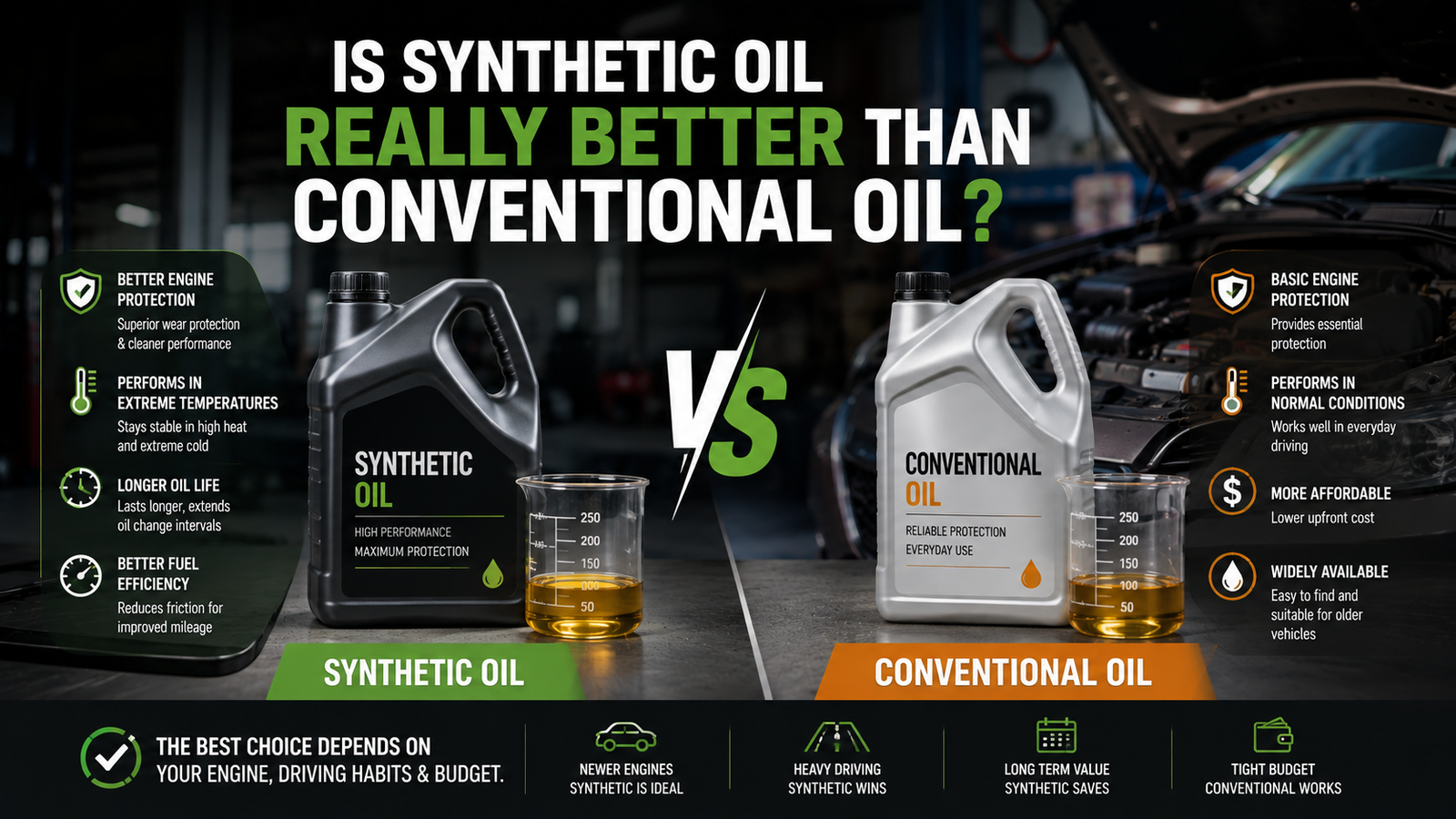
Comparing synthetic oil vs conventional oil comes down to understanding how each one protects moving engine parts under stress.
At Claymont Auto, DE, our certified technicians help local drivers understand their options every day. We recommend oil based on the vehicle, manufacturer requirements, and everyday driving habits.
What Actually Happens Inside Your Engine?
To understand why synthetics perform differently, it helps to look at how manufacturers produce them. Conventional oil comes from refined crude oil.
Traditional formulas can contain molecules of different sizes. Heat and cold can affect how quickly the oil flows and how well it holds up over time.
Manufacturers engineer synthetic oils for more consistent performance. Their more uniform molecular structure helps the oil flow smoothly and resist thermal breakdown.
Synthetic oil can also maintain its viscosity across a wider range of temperatures.
When you schedule a professional Delaware auto service, a technician can determine whether synthetic oil makes sense for your vehicle. In vehicles designed for it, synthetic oil can provide strong protection during start-up and demanding driving conditions.
If you’re looking for synthetic oil service Wilmington, DE, choosing the right oil can help protect your engine through Delaware’s changing seasonal temperatures.
These differences also help answer another common question: does synthetic oil improve engine life over time?
In many cases, it can help. Synthetic oil provides strong protection against heat, deposits, and wear. When you combine the right oil with regular maintenance, it can support long-term engine health.
Thermal Stability and Extreme Conditions
Delaware weather can be tough on engine oil, from hot summer days to freezing winter mornings.
In colder temperatures, conventional oil tends to thicken more, so it may take a little longer to circulate through the engine after startup.
Cold starts can increase engine wear when oil takes longer to circulate. Synthetic oil generally flows more easily at low temperatures. This helps it reach important engine parts sooner.
Hot weather creates a different challenge. High temperatures can cause some oils to oxidize and break down more quickly.
Once oil begins to break down, it may have more difficulty maintaining a protective film between moving components.
Synthetic oils generally resist high temperatures and breakdown better than conventional oils. For many turbocharged, direct-injection, and high-load engines, full synthetic is often considered the best engine oil for cars because of its heat resistance and stability.
Long-Term Value and Service Intervals
Driving habits and service intervals also matter when choosing oil.
One common question is: How long does synthetic oil last compared with conventional oil?
Many vehicles using conventional oil may need service around every 3,000 to 5,000 miles. However, the correct interval depends on the vehicle and manufacturer recommendations.
Synthetic oil often lasts between 7,500 and 10,000 miles. Some manufacturers allow longer intervals for certain vehicles.
Always follow the service schedule in your owner’s manual instead of relying on mileage alone.
When thinking about overall car maintenance, Claymont, DE drivers may find that longer synthetic oil intervals help offset some of the higher upfront cost.
Fewer oil changes may reduce the difference in cost over time. Synthetic oil can also provide strong protection between scheduled services.
During routine vehicle maintenance, we can check other items and let you know if something needs attention.
You may need a car battery replacement before winter or notice early signs of exhaust system problems. Regular inspections can help catch these issues before they become more serious.
Finding the Right Fit for Your Vehicle
Not every vehicle requires full synthetic oil. However, many modern engines use it or benefit from its performance characteristics.
Some older, high-mileage engines can continue using conventional oil if it meets the manufacturer’s specifications. Owners should also follow the recommended change interval.
Many newer vehicles are designed to use synthetic blend or full synthetic oil. The exact requirement depends on the engine and manufacturer.
When comparing synthetic oil vs conventional oil for your sedan or work truck, start with the owner’s manual. You can also ask an experienced technician for guidance.
At Claymont Auto, DE, we help take the guesswork out of vehicle maintenance. Our team considers your vehicle requirements, driving habits, and budget before making a recommendation.
Frequent stop-and-go traffic can place extra demands on engine oil. The same applies to towing and other demanding driving conditions. Regular Delaware auto service can help you stay on top of the maintenance your vehicle actually needs.
Frequently Asked Questions
Does synthetic oil improve gas mileage?
Synthetic oil may provide a small efficiency benefit in some vehicles. It can reduce internal friction compared with some conventional oils.
However, the difference in fuel economy is usually modest. Driving habits, tire pressure, engine condition, and vehicle design often have a greater impact.
Is synthetic oil worth the extra cost?
For many drivers, the additional cost can be worthwhile.
Synthetic oil often provides longer service intervals and better resistance to heat and breakdown. However, you should still follow your manufacturer’s required oil specification and maintenance schedule.
Over time, fewer oil changes may help balance the higher upfront cost.
Does synthetic oil last longer than regular oil?
Yes, synthetic oil generally lasts longer than conventional oil because it resists oxidation and breakdown.
Conventional oil may require changes around every 3,000 to 5,000 miles in some vehicles. Synthetic oil may last 7,500 to 10,000 miles or longer in others.
Your owner’s manual should always determine the correct interval for your vehicle.
Can I switch from conventional oil to synthetic oil?
Most modern vehicles can safely switch from conventional to synthetic oil.
Before making the change, check the oil specification listed in your owner’s manual. A technician can also help you choose the correct viscosity and specification for your engine.
Trust Claymont Auto Repair for Reliable Upkeep
Keeping up with fluids and scheduled maintenance can help your vehicle perform reliably for years.
Comparing synthetic oil vs conventional oil shows why many drivers choose synthetic for heat resistance, wear protection, and longer service intervals.
When you are ready for your next service, count on Claymont Auto, DE, for straightforward advice and professional care.
From a synthetic oil service in Wilmington, DE, to complete car maintenance Claymont, DE, our team can help you stay on top of the services your vehicle needs.
Contact us today or visit our shop to book your appointment.