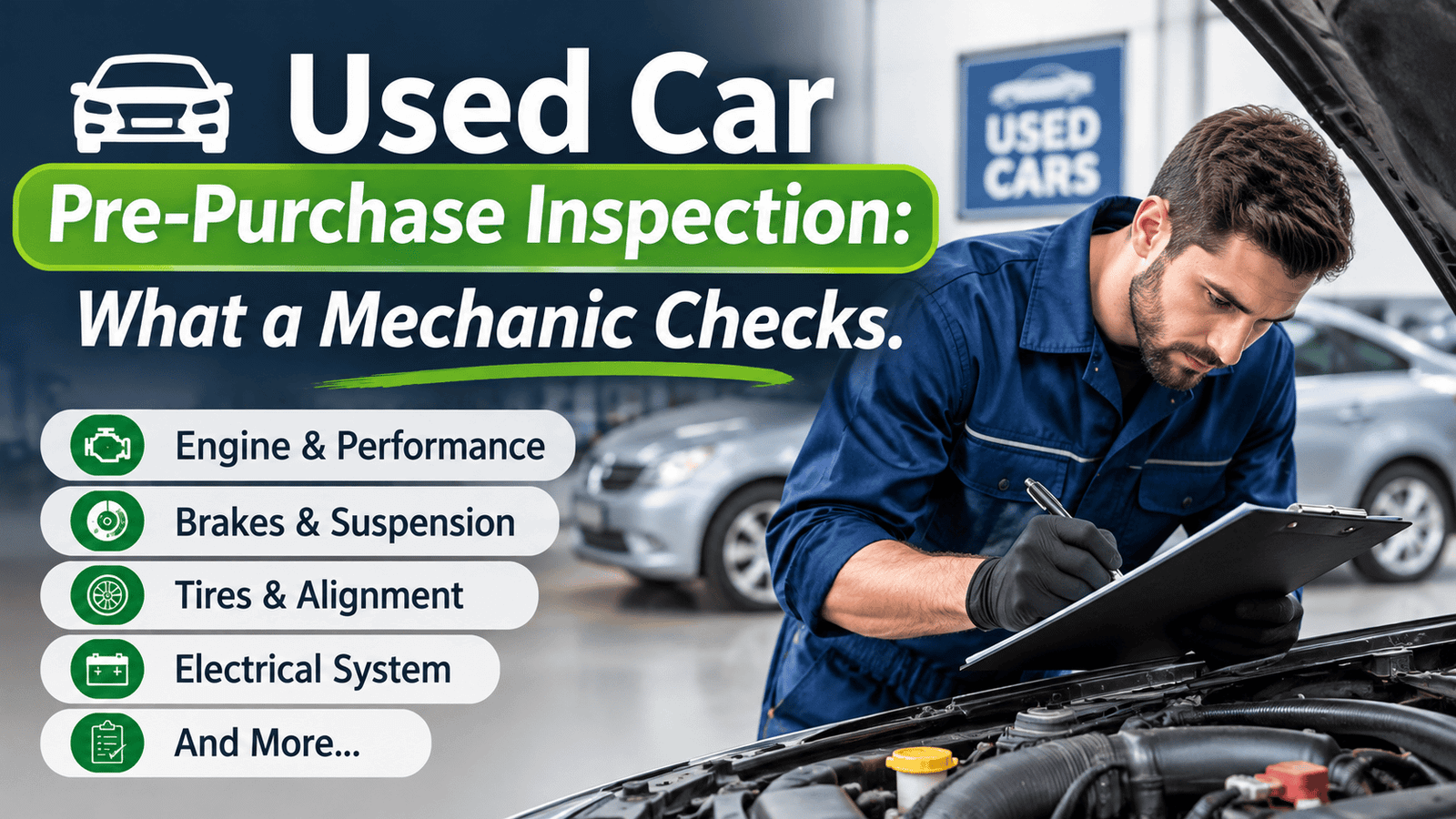
Most people shop for a used car with their eyes. The color looks good, the price seems fair, and the test drive feels fine. Then a month later the check engine light comes on and the repair bill is huge. A pre purchase car inspection helps you avoid that. If you’re in Claymont, DE, or around Wilmington and Brandywine, having a mechanic look the car over before you sign is cheap protection.
Why a Second Opinion Matters
Sellers aren’t always lying when they say a car runs great. Sometimes they just don’t know what’s wrong with it. A driveway or a small lot has no lift, no scan tool, and no years of shop experience. A used car inspection by mechanic puts someone on your side who has nothing to gain from the sale.
The report also helps with price. If the brakes need work or something is leaking, you can ask the seller to lower the price or fix it first. If the list of problems is long, you’ll know to walk away.
What Gets Checked Under the Hood
The mechanic usually starts with the engine. Oil tells a story, and black, gritty, or milky oil is a bad sign. Coolant, brake fluid, and transmission fluid get checked too, since low or dirty fluid often means the car wasn’t looked after.
Next come the belts, hoses, and battery. Cracked rubber and a weak battery are easy to miss, but they leave people stranded. The mechanic also listens to the engine for knocking, ticking, or a rough ride.
Frame, Body, and Rust
A car that’s been in a wreck can look perfect on the outside. On a lift, the mechanic can spot bent frame parts, welds, or fresh paint where it doesn’t belong. Panels that don’t line up and paint in a slightly different shade are other hints of a past repair.
Rust matters a lot here because of the salt on Delaware roads in winter. A little surface rust is normal. Heavy rust on the frame, brake lines, or exhaust is not, and it can cost more to fix than the car is worth.
Brakes, Tires, and Suspension
These parts keep you safe, so they get a close look. Brake pads and rotors are measured for wear. Tires are checked for tread depth, age, and uneven wear, which can point to alignment or suspension trouble. Shocks, struts, and steering parts are tested too, and any looseness or clunking gets written down.
Electrical Parts and the Interior
Modern cars are full of electronics, and they’re pricey to fix. The mechanic tests the lights, wipers, windows, locks, heat, and AC. A scan tool reads error codes from the car’s computer. Some sellers clear a warning light before a showing, but stored codes can still turn up.
Inside, the mechanic checks the seat belts and looks for water damage. A damp carpet or a musty smell can mean a leak, or even a past flood.
The Road Test
Last, the mechanic drives the car. They notice how it shifts, how it brakes, and whether it pulls to one side. Shaking at highway speed, grinding when stopping, or a gear change that hesitates all point to trouble. Driving it ties the rest of the inspection together and shows you how the car behaves in real traffic, not just in a parking lot.
FAQs
How to inspect cars before buying?
Start with a walk around in daylight. Check the paint, tires, glass, and body for damage. Look at the fluids, test every light and button, and take a test drive. Ask for the vehicle history report too. Then book a full pre-purchase car inspection, because a lift and a scan tool will find things you can’t.
What are the 7 steps for a pre-trip inspection?
It’s a quick check you do before driving, usually on your own vehicle. The seven steps are the tires, lights, brakes, fluid levels, belts and hoses, mirrors and windshield, and dashboard warning lights. It takes a few minutes and helps you catch small problems early.
What do mechanics check during PPI?
They look at the engine, transmission, brakes, tires, suspension, steering, frame, and electrical parts. They also check for leaks, rust, and accident repairs, and they scan the computer for codes. Most shops finish with a test drive and a written report.
Final Thoughts
Buying used doesn’t have to be stressful. A used car inspection by mechanic costs little compared to a hidden problem down the road. If you’re shopping in Claymont, DE or nearby, Claymont Auto is here to help. Bring the car in, and we’ll go through it carefully and explain what we find in plain words, so you can decide with confidence.