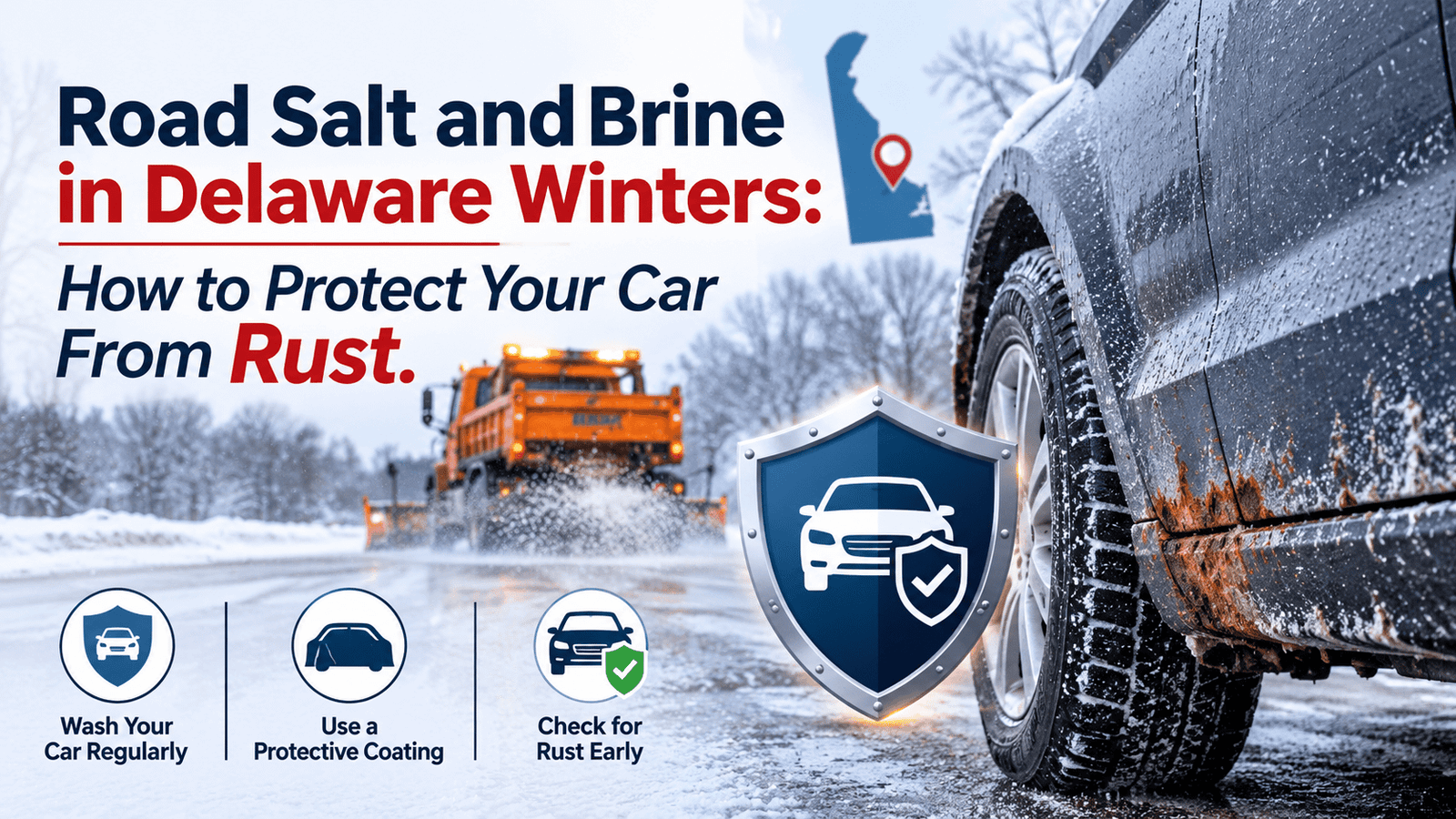
Freezing rain can coat Delaware highways, and a nor’easter can dump snow across New Castle County. When that happens, state road crews move quickly to keep traffic moving. Brine trucks head out before the storm, applying liquid treatments to help prevent ice from bonding to the pavement.
Salt spreaders also treat major roads like I-95 and Route 13. While these treatments make winter driving safer, the salt left behind can accelerate corrosion on exposed vehicle components.
Chemical de-icers stick to your car’s undercarriage, where repeated exposure to salty moisture can lead to rust. Over time, corrosion can damage metal components and result in expensive repairs.
Understanding how winter road treatments affect your vehicle is an important part of Delaware winter car care, especially if you regularly drive on treated roads.
How Chemical De-Icers Accelerate Vehicle Corrosion
To understand why winter driving is hard on vehicles, it helps to look at what happens underneath your car.
Road treatments lower the freezing point of water, helping prevent ice formation or melt existing ice. However, the salty moisture left on roads can create conditions that accelerate metal corrosion.
Salt attracts and retains moisture. When sodium chloride dissolves in water, it separates into sodium and chloride ions. This increases the water’s electrical conductivity and supports the electrochemical reactions that cause iron and steel to rust.
Liquid brine can also contribute to corrosion. Brine is a saltwater solution used to pretreat roads before certain winter storms. Delaware road crews commonly use sodium chloride brine for this purpose.
As you drive over wet, treated roads, your tires spray salty water onto exposed metal surfaces. The solution can reach seams, frame openings, and areas around brake lines and suspension components.
Which Undercarriage Components Are Most Vulnerable?
The top half of your car gets regular washes and paint protection. The underside is different. It takes much of the exposure to winter road spray.
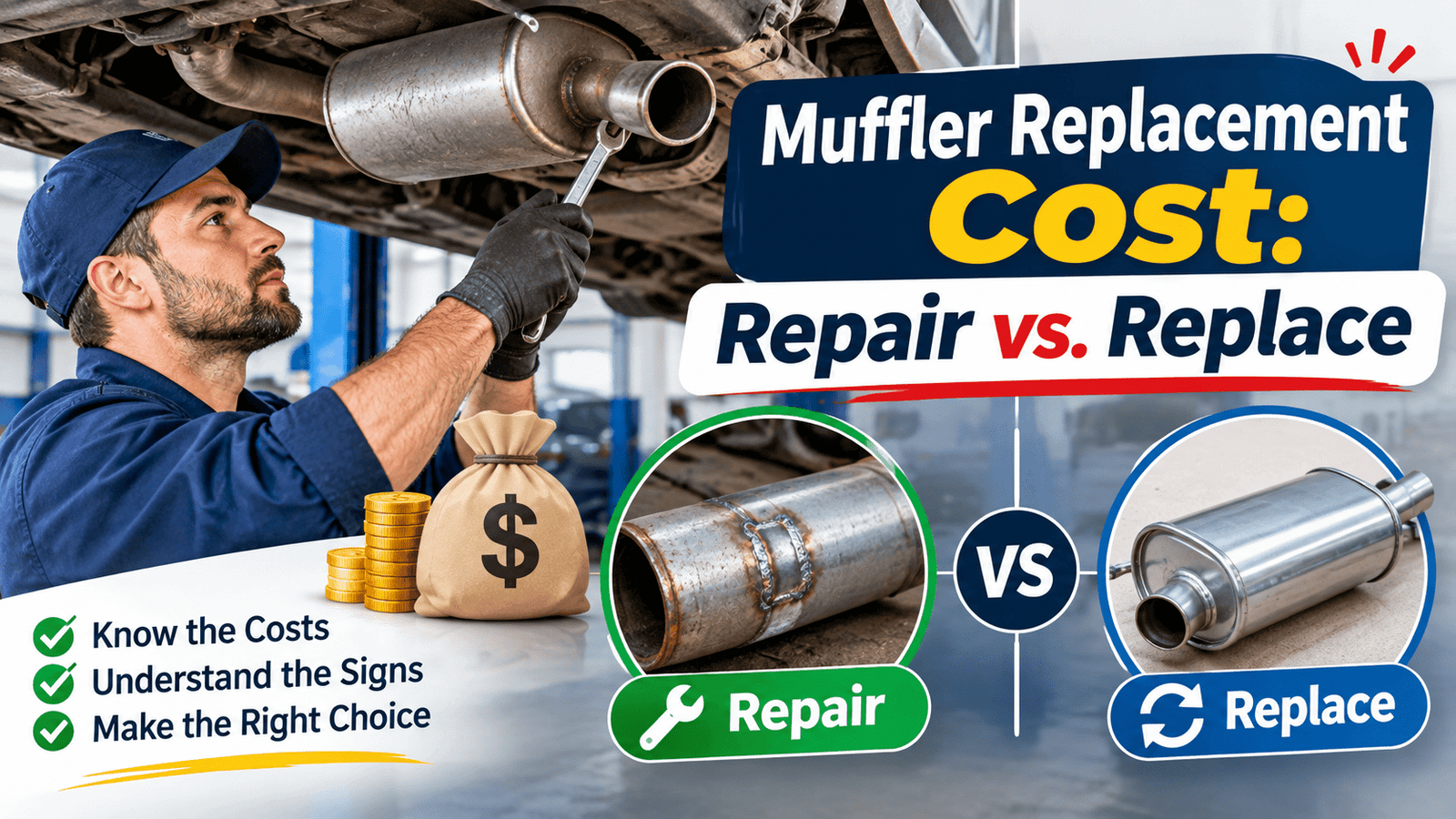
Exhaust systems are regularly exposed to moisture, heat, and road salt. Over time, corrosion can weaken exhaust pipes, mufflers, and connections.
A corroded exhaust system can develop leaks, potentially allowing harmful gases, including carbon monoxide, to enter the cabin. Exhaust leaks can also cause a vehicle to fail Delaware’s safety inspection.
Brake lines, fuel lines, suspension components, and subframes are also vulnerable.
Steel brake lines run along the chassis and are exposed to road moisture. Severe corrosion can cause these lines to leak or rupture, reducing braking performance and creating a serious safety risk.
Many drivers wash their car’s exterior to remove winter grime but forget about the underside. Salt can remain around exposed components long after the body panels look clean.
4 Essential Practices to Prevent Winter Rust
A few maintenance habits can reduce salt buildup and help protect your vehicle during Delaware winters.
1. Wash Your Undercarriage Regularly
After driving on heavily salted roads, use a car wash with an underbody spray to remove accumulated salt and grime.
Pay particular attention to winter periods when roads remain wet and treated with de-icing chemicals.
Regular undercarriage washing helps remove corrosive residue before it sits on exposed metal for extended periods.
2. Apply Undercoating or Rust Protection
Consider applying a vehicle-compatible rust inhibitor before winter.
Oil-based, wax-based, and other protective coatings can help limit contact between exposed metal and salty moisture when properly applied.
Some hard coatings can crack or trap moisture if the surface isn’t prepared correctly. Have existing rust assessed before applying an undercoating, and follow the product manufacturer’s instructions.
3. Wax Your Paint and Seal Minor Chips
Your car’s paint and clear coat protect its exterior metal panels.
Before winter, apply a quality automotive wax or paint sealant to provide an additional protective layer against road grime and salt residue.
Touch up paint chips and scratches that expose bare metal. These damaged areas are more vulnerable to corrosion when exposed to moisture and road salt.
4. Keep Your Interior Carpets Dry
Salt and slush don’t stay outside your car. They come inside on your shoes and can soak into floor mats and carpeting.
If moisture reaches the metal floor panels beneath the carpet, it can contribute to corrosion over time.
Use rubber floor liners to collect slush, empty them regularly, and allow wet carpeting to dry.
Frequently Asked Questions
How do you keep road salt from rusting your car?
Wash your vehicle regularly during winter, paying particular attention to the undercarriage.
Apply protective wax or paint sealant, repair paint chips, and consider an appropriate rust inhibitor for exposed underbody components.
Removing accumulated salt after winter storms can reduce the conditions that contribute to corrosion.
How do you protect a car from rust during winter?
Combine regular washing with basic exterior and underbody maintenance.
Keep the undercarriage clean, repair exposed paint damage, and use rubber floor mats to prevent salty water from soaking into the carpeting.
Check for existing rust before winter and have heavily corroded components inspected by a qualified technician.
Is road brine bad for your car?
Road brine can contribute to corrosion because it contains dissolved salt.
As vehicles travel over treated roads, salty moisture can reach exposed underbody components, seams, and metal connections.
Regular washing helps remove this residue and reduces prolonged exposure.
What kind of salt is used on icy roads?
Road crews commonly use rock salt, also called sodium chloride, to treat icy roads.
Liquid sodium chloride brine is also used to pretreat roads before winter weather.
Other de-icing products, including calcium chloride and magnesium chloride, are used in some areas depending on weather conditions and road maintenance practices.
Why Preventive Maintenance Matters
Regularly removing road salt can reduce corrosion-related damage and help limit future repair costs.
Rusted brake lines, damaged suspension components, and deteriorating exhaust systems can require significant repairs. Catching corrosion early gives you a chance to address problems before they become more serious.
If you notice heavily rusted brake lines, fluid leaks, or significant corrosion around suspension mounting points, have the vehicle inspected before continuing to drive.
Trusted Auto Repair in Claymont, DE
Some rust is easy to spot, but corrosion beneath your vehicle can go unnoticed until it affects an important component.
At Claymont Auto Repair, we help local drivers address brake problems, exhaust issues, and other maintenance concerns that can develop over time.
If you’ve noticed a new exhaust noise, signs of a fluid leak, or visible rust around important components, bring your car by. We’ll check out the problem and explain what needs attention.
Keep your car in good shape through Delaware’s winter weather. Stop by Claymont Auto Repair in Claymont, DE, to get it checked.