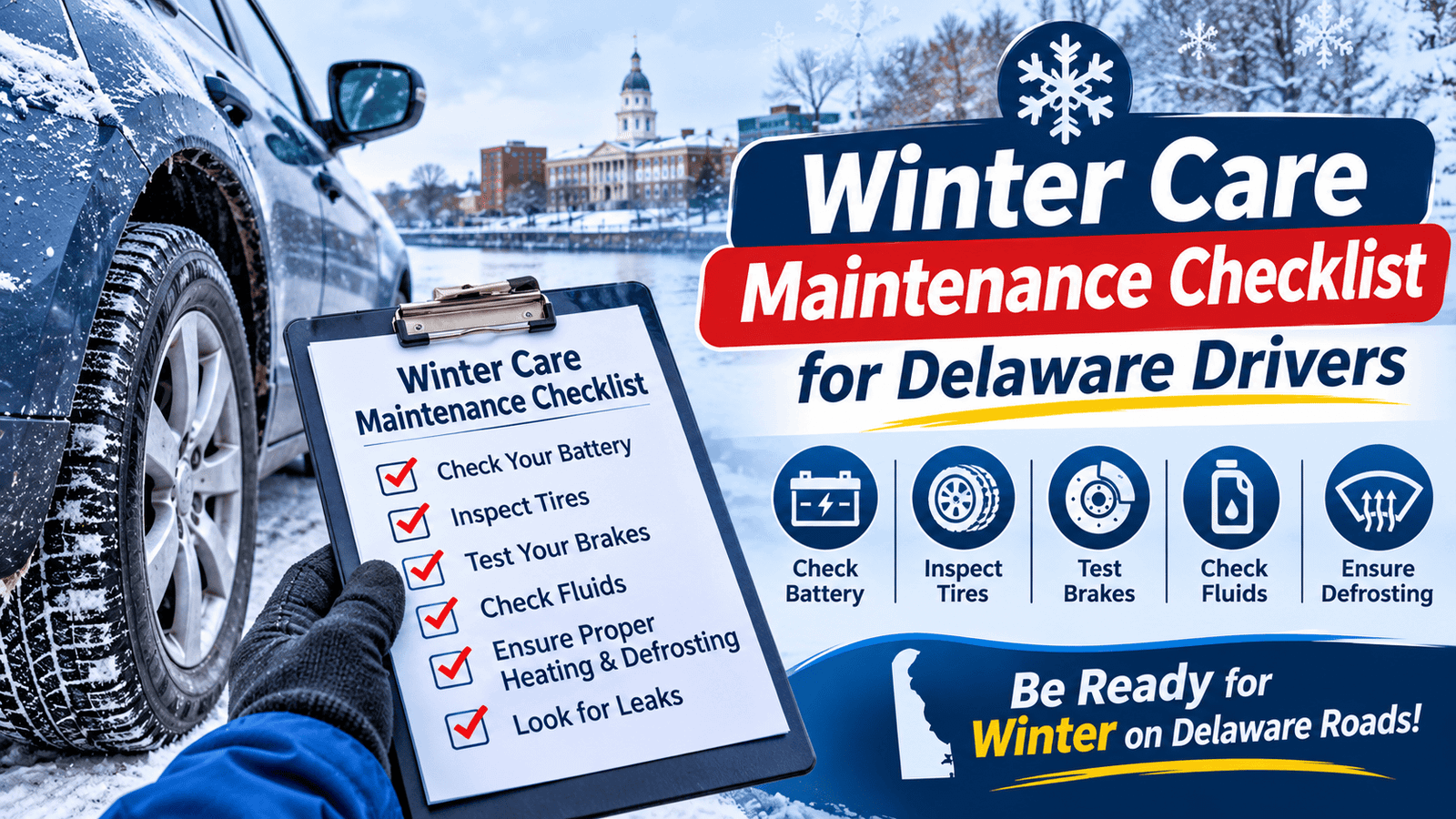
Autumn leaves finish falling. The morning air turns sharp along the Brandywine River. When that happens, you know freezing temperatures are just around the corner.
Delaware winters might not bring massive blizzards every year. Even so, falling temperatures, overnight frost, and freezing rain can put extra stress on your vehicle.
Preparing your car before the first hard freeze can reduce the risk of breakdowns and help you drive more safely.
Getting your vehicle ready for cold weather doesn’t have to be complicated. Following a winter car maintenance checklist can help you identify problems before temperatures drop.
Taking care of a few important systems now may save you from waiting for a tow truck on the shoulder of I-95 on a freezing winter night.
Protecting Your Engine With Fluid Checks
Your vehicle relies on several fluids to lubricate moving parts, regulate temperature, and keep essential systems working. Cold weather can affect how some of these fluids perform.
Start your seasonal inspection by checking the engine oil level and condition. If an oil change is due, use the oil viscosity recommended in your owner’s manual for your vehicle and expected temperatures.
Next, check your engine coolant, also known as antifreeze. A properly maintained coolant mixture helps protect the engine’s cooling system from freezing and potential damage. A coolant test can determine whether the mixture provides adequate freeze protection.
Don’t forget your windshield washer fluid. Replace summer bug wash with a winter-rated washer fluid suitable for the temperatures expected in Delaware.
Washer fluid that isn’t rated for freezing temperatures may freeze in the reservoir, hoses, or spray nozzles, leaving you unable to clean your windshield when you need it most.
Testing Battery Health and Electrical Systems
Automotive batteries are particularly sensitive to cold weather. Low temperatures slow the chemical reactions inside a battery, reducing the power available to start your vehicle.
At the same time, a cold engine can require more effort to start. If your battery is already weak, freezing temperatures may make the problem more noticeable.
If your battery is more than three years old, consider having it tested before winter to check its condition.
Open the hood and check the battery terminals for white or greenish corrosion. If you notice buildup, have the terminals cleaned safely. Proper battery maintenance can help maintain reliable electrical connections.
Your engine may crank slowly on cold mornings. You might also notice dim headlights or other electrical warning signs. If either happens, visit a repair shop to have your battery and charging system tested before you’re left stranded in a parking lot.
Maintaining Traction With Tires and Brakes
Your tires play an important role in maintaining traction on wet, snowy, and icy roads. Worn tires can make it harder to stop safely, especially when Delaware roads become slippery.
Use a tread-depth gauge or the quarter test to check tire wear. Tires with insufficient tread have less traction on wet or snowy roads and may increase the risk of hydroplaning.
Check your tire pressure regularly, too. Tire pressure often drops as temperatures fall. Measure the pressure when the tires are cold and inflate them according to the vehicle manufacturer’s recommendations, not the maximum pressure printed on the tire.
Pay attention to your brakes as well. Listen for squeaking or grinding noises, and notice whether your vehicle pulls to one side when braking.
If you experience these symptoms, have your braking system inspected before winter driving conditions make stopping even more challenging.
Frequently Asked Questions
What Should I Check on My Regular Vehicle Maintenance Checklist?
A regular vehicle maintenance checklist should include engine oil, coolant, brake fluid, tire pressure, tire tread, brake condition, and battery health.
You should also inspect the wiper blades, exterior lights, and other fluids according to your vehicle manufacturer’s recommendations.
What Are the 7 Basic Fluids of Car Care?
Common vehicle fluids include engine oil, engine coolant, transmission fluid, brake fluid, power steering fluid, windshield washer fluid, and differential or transfer case fluid.
Not every vehicle uses all seven, so check your owner’s manual for the fluids your car requires.
What Should I Include in My Winter Survival Kit for My Car?
Keep a flashlight, warm blankets, gloves, bottled water, nonperishable snacks, a first-aid kit, and a phone charger in your vehicle.
An ice scraper, snow brush, jumper cables or a portable jump starter, and reflective warning triangles can also be useful during winter emergencies.
What Should I Have in My Car During Winter?
Keep an ice scraper, snow brush, warm gloves, and a portable phone charger within easy reach.
It’s also useful to carry a small shovel and traction material, such as sand or non-clumping cat litter, in case your vehicle gets stuck.
Keep lock deicer accessible outside the vehicle, since it won’t help if it’s locked inside.
Preparing Your Cabin Visibility and Wipers
Winter weather can make it harder to see the road, especially during early morning drives, freezing rain, or snowstorms.
Worn wiper blades can leave streaks across the windshield, reducing visibility and making glare from oncoming headlights worse.
If your wiper blades start chattering or leave streaks behind, replace them before winter weather arrives.
Winter wiper blades with protective coverings can also help reduce snow and ice buildup around the wiper mechanism.
Completing your winter car maintenance checklist early gives you time to address worn components before Delaware’s colder weather sets in.
Staying Prepared on the Road Ahead
Preparing your vehicle for winter can reduce the risk of unexpected repairs and help you handle colder driving conditions.
Following a winter car maintenance checklist gives you a practical place to start. Regular inspections can help identify worn components before they cause more serious problems.
Claymont Auto Repair provides vehicle inspections, battery testing, cooling system maintenance, and brake services for local drivers.
Get your car checked at Claymont Auto Repair before Delaware’s winter weather sets in.