Which Part of a Car Is Most Expensive to Fix?

Which Part of a Car Is Most Expensive to Fix?

Ask any mechanic what repair makes customers wince the hardest, and two answers come up almost every time. Engines and transmissions sit at the top of nearly every list of car repair costs. Once you see the numbers, it's easy to understand why. Here's what actually drives these prices and what else deserves a spot on your radar. Engine Problem Nobody Wants to Hear About An engine failure changes the whole conversation with your mechanic. Suddenly you're not talking about a repair, you're talking about a replacement, and that shift in language usually means a shift in price too. A brand-new engine typically costs between 3,500 and 8,000 dollars for most mainstream four- and six-cylinder vehicles, although the total replacement cost can vary depending on labor and the type of engine. Go with a used engine pulled from a junkyard instead, and you're looking at 1500 to 4500 dollars, though you're trading savings for some added risk. Either way, engine replacement cost rarely stops at just the engine itself, since shops may recommend replacing wear items such as the water pump, timing components (where applicable), and motor mounts if they show signs of wear while the engine is already out. Why the Repair Bill Isn't Always the Full Replacement Number The good news is that most engine problems don't actually require a full swap. Car engine repair cost varies enormously depending on what's actually broken. A sensor failure or a blown gasket might run you a few hundred dollars, nowhere near replacement territory. Age plays a role here too. Older engines tend to reveal more problems once a mechanic starts digging, since one worn part rarely fails alone. So, when someone asks what a repair will cost, the honest answer is usually it depends, and getting a proper diagnosis first is what separates a manageable bill from an expensive surprise. Transmissions Cost Just As Much, Sometimes More Right behind the engine sits the transmission, and this repair carries its own reputation for draining bank accounts.  Transmission replacement typically costs between 3,800 and 8,000 dollars, depending on the vehicle, the type of transmission, and labor costs. Luxury and performance vehicles often cost more.  The good news with transmission replacement cost is that warning signs rarely stay quiet. Slipping gears, fluid leaks, and delayed acceleration almost always show up before a transmission fails completely, giving drivers a window to act before the damage compounds. What Else Belongs on the List Engines and transmissions get most of the attention, but they aren't alone among the most expensive car repairs. Hybrid battery packs carry a steep price tag of their own, since the specialized cells inside them don't come cheap or easy to source.  Newer vehicles have added their own expensive surprises too, particularly around driver assistance systems that need recalibration anytime a windshield gets replaced. Suspension work deserves a mention as well. One worn strut is a manageable fix, but a full suspension failure touching multiple components at once turns into a much bigger job fast.  Compared to engines and transmissions, these repairs tend to sneak up on people, since they don't always come with the same clear warning signs. Staying Ahead of Major Car Repairs None of this has to catch you off guard. Regular oil changes protect your engine from the slow wear that eventually forces a replacement. Transmission fluid flushes, kept on schedule, do the same thing for your transmission, extending its life well past what neglect would allow. Most major car repairs don't happen overnight. They build slowly, through small warning signs that get ignored until they can't be anymore.  A strange noise addressed early costs far less than the same noise ignored for another six months. Finding a shop you trust and sticking to a maintenance schedule is genuinely the cheapest insurance policy your car will ever have. Frequently Asked Questions What is the most expensive thing to repair on a car? Engine replacement usually tops the list, often running several thousand dollars once parts and labor are added together. Transmission replacement isn't far behind, and both repairs can rival or exceed what an older vehicle is actually worth. Is it cheaper to replace an engine or buy a new car? That depends on your vehicle's condition and age. A common rule of thumb says if the repair cost climbs above roughly sixty percent of the car's current value, buying a replacement vehicle usually makes more financial sense than fixing the old one. What are the most expensive car repairs to avoid? Engine failure, transmission breakdown, and hybrid battery replacement sit at the top of that list. Staying current on oil changes, fluid flushes, and routine inspections goes a long way toward keeping these major repairs from becoming necessary in the first place. Final Thoughts Engines and transmissions carry the heaviest price tags of any car repair, but neither one has to blindside you if you pay attention along the way. Knowing what drives these car repair costs can help you catch small problems early, before they turn into major repairs or a full replacement. If your engine or transmission is showing warning signs, the team at Claymont Auto Repair can take a look before the problem grows into something far more expensive.
Ask any mechanic what repair makes customers wince the hardest, and two answers come up almost every time.

Engines and transmissions sit at the top of nearly every list of car repair costs. Once you see the numbers, it’s easy to understand why.

Here’s what actually drives these prices and what else deserves a spot on your radar.

Engine Problem Nobody Wants to Hear About

An engine failure changes the whole conversation with your mechanic. Suddenly you’re not talking about a repair, you’re talking about a replacement, and that shift in language usually means a shift in price too.

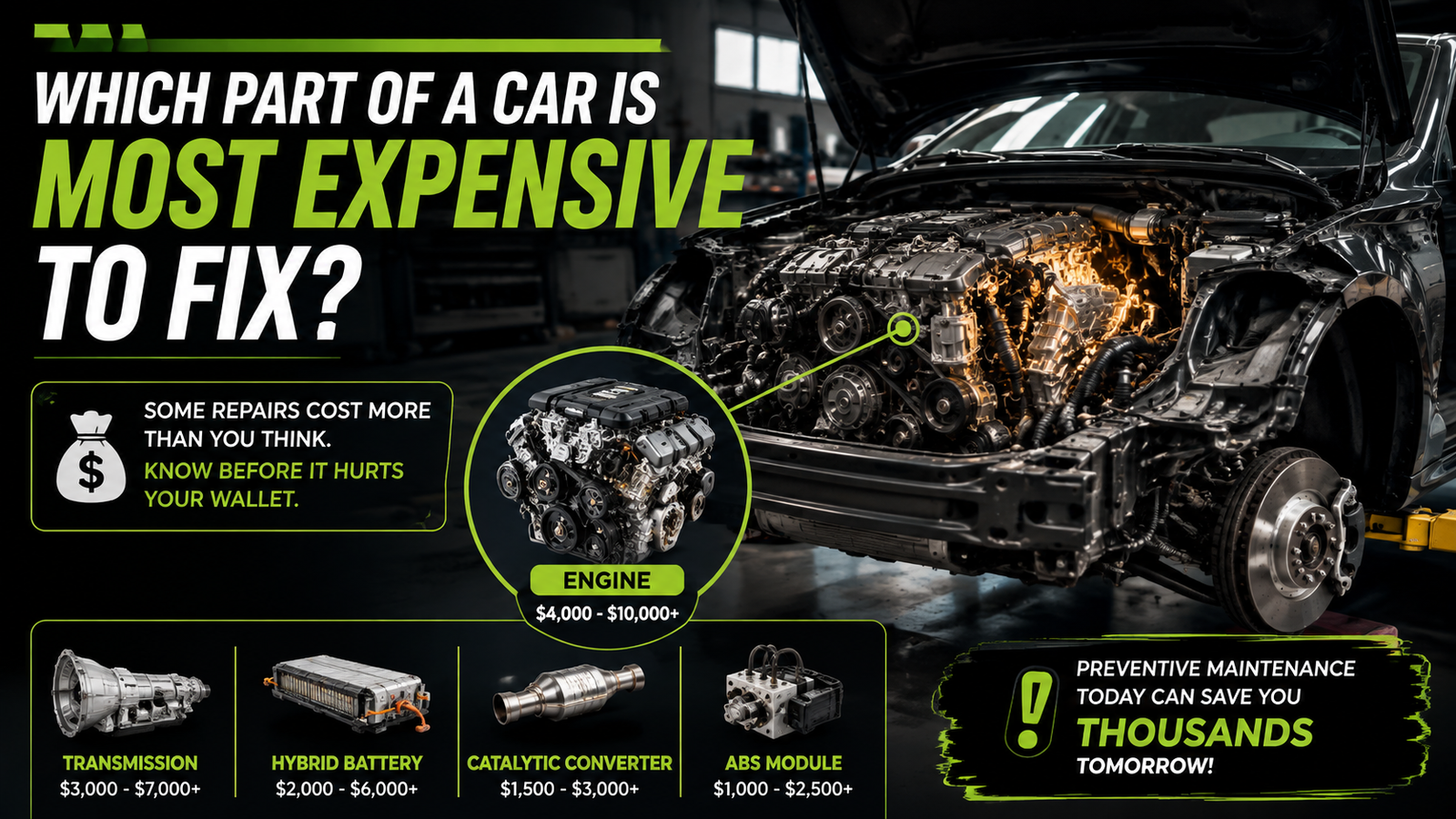
A brand-new engine typically costs between 3,500 and 8,000 dollars for most mainstream four- and six-cylinder vehicles, although the total replacement cost can vary depending on labor and the type of engine.

Go with a used engine pulled from a junkyard instead, and you’re looking at 1500 to 4500 dollars, though you’re trading savings for some added risk.

Either way, engine replacement cost rarely stops at just the engine itself, since shops may recommend replacing wear items such as the water pump, timing components (where applicable), and motor mounts if they show signs of wear while the engine is already out.

Why the Repair Bill Isn’t Always the Full Replacement Number

The good news is that most engine problems don’t actually require a full swap. Car engine repair cost varies enormously depending on what’s actually broken.

A sensor failure or a blown gasket might run you a few hundred dollars, nowhere near replacement territory.

Age plays a role here too. Older engines tend to reveal more problems once a mechanic starts digging, since one worn part rarely fails alone.

So, when someone asks what a repair will cost, the honest answer is usually it depends, and getting a proper diagnosis first is what separates a manageable bill from an expensive surprise.

Transmissions Cost Just As Much, Sometimes More

Right behind the engine sits the transmission, and this repair carries its own reputation for draining bank accounts. 

Transmission replacement typically costs between 3,800 and 8,000 dollars, depending on the vehicle, the type of transmission, and labor costs. Luxury and performance vehicles often cost more. 

The good news with transmission replacement cost is that warning signs rarely stay quiet. Slipping gears, fluid leaks, and delayed acceleration almost always show up before a transmission fails completely, giving drivers a window to act before the damage compounds.

What Else Belongs on the List

Engines and transmissions get most of the attention, but they aren’t alone among the most expensive car repairs. Hybrid battery packs carry a steep price tag of their own, since the specialized cells inside them don’t come cheap or easy to source. 

Newer vehicles have added their own expensive surprises too, particularly around driver assistance systems that need recalibration anytime a windshield gets replaced.

Suspension work deserves a mention as well. One worn strut is a manageable fix, but a full suspension failure touching multiple components at once turns into a much bigger job fast. 

Compared to engines and transmissions, these repairs tend to sneak up on people, since they don’t always come with the same clear warning signs.

Staying Ahead of Major Car Repairs

None of this has to catch you off guard. Regular oil changes protect your engine from the slow wear that eventually forces a replacement. Transmission fluid flushes, kept on schedule, do the same thing for your transmission, extending its life well past what neglect would allow.

Most major car repairs don’t happen overnight. They build slowly, through small warning signs that get ignored until they can’t be anymore. 

A strange noise addressed early costs far less than the same noise ignored for another six months. Finding a shop you trust and sticking to a maintenance schedule is genuinely the cheapest insurance policy your car will ever have.

Frequently Asked Questions

What is the most expensive thing to repair on a car?

Engine replacement usually tops the list, often running several thousand dollars once parts and labor are added together. Transmission replacement isn’t far behind, and both repairs can rival or exceed what an older vehicle is actually worth.

Is it cheaper to replace an engine or buy a new car?

That depends on your vehicle’s condition and age. A common rule of thumb says if the repair cost climbs above roughly sixty percent of the car’s current value, buying a replacement vehicle usually makes more financial sense than fixing the old one.

What are the most expensive car repairs to avoid?

Engine failure, transmission breakdown, and hybrid battery replacement sit at the top of that list. Staying current on oil changes, fluid flushes, and routine inspections goes a long way toward keeping these major repairs from becoming necessary in the first place.

Final Thoughts

Engines and transmissions carry the heaviest price tags of any car repair, but neither one has to blindside you if you pay attention along the way.

Knowing what drives these car repair costs can help you catch small problems early, before they turn into major repairs or a full replacement.

If your engine or transmission is showing warning signs, the team at Claymont Auto Repair can take a look before the problem grows into something far more expensive.

Leave a Reply

Your email address will not be published. Required fields are marked *