Most people never think about their fuel pump until it starts acting up. It sits inside or near the fuel tank, doing its job quietly and pushing gas to the engine so the car runs the way it should. But like any part, it wears down over time. And when it does, you’ll usually get a few warnings before things get really bad. Catching those early fuel pump symptoms can save you a tow truck bill and a lot of frustration.
Why This Little Part Matters So Much
Here’s the thing about the fuel pump: It keeps fuel moving at the right pressure so your engine gets a steady supply. When that pressure drops or becomes inconsistent, the engine simply doesn’t get what it needs. Heat, dirt, old age, all of it adds up over the years. And that’s usually when drivers start noticing fuel delivery problems that weren’t there before.
The Warning Signs You Shouldn’t Ignore
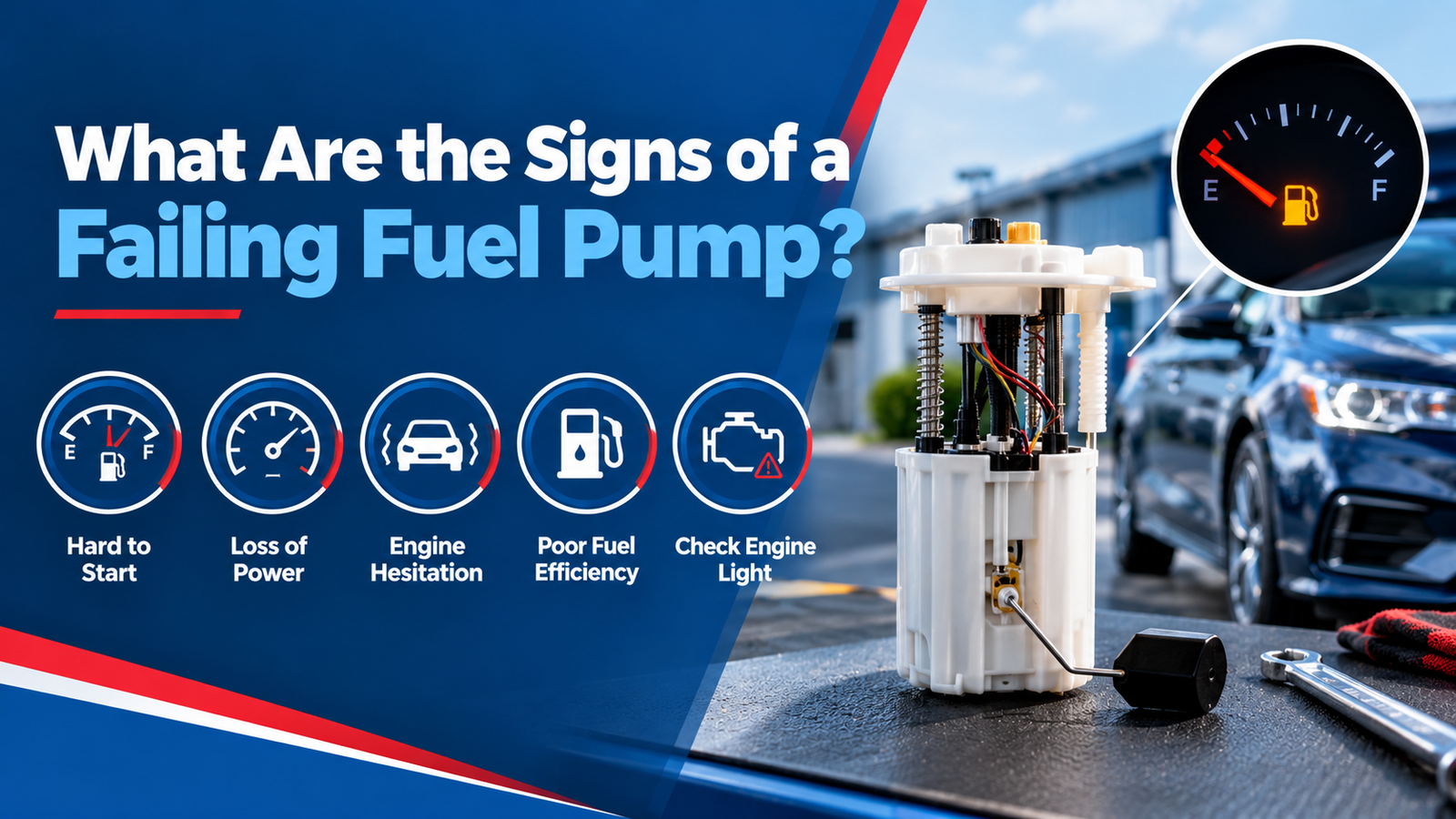
Trouble starting the car is usually the first thing people notice. You turn the key, and instead of the engine firing right up, it cranks and cranks. Sometimes it starts after a few tries; sometimes it doesn’t start at all. This is one of the more obvious signs of a failing fuel pump, and honestly, it’s the one that pushes most people to finally get it checked.
Then there’s the lagging. You’re driving along, maybe on the highway, and the car just hesitates or jerks for no clear reason. It can feel like the engine is losing power right when you need it most, like merging or passing another car. That loss of power under load is a strong hint that the pump can’t keep up anymore.
Noise is another hint. A humming sound near the back of the car, close to the fuel tank, often means the pump is struggling. It’s not always loud at first. Once you notice it, it’s hard to unhear.
Random stalling is probably the biggest symptom on this list. The engine just shuts off, sometimes while you’re driving, sometimes at a stoplight. It might happen once and then not again for days, which makes people assume it was a coincidence. But if it keeps happening, that’s a real sign of ongoing fuel pump problems that need attention.
And don’t overlook your gas mileage. If you’re filling up more often than you used to and can’t explain why, a weakening pump could be part of the reason. It’s easy to blame traffic or driving habits, but sometimes it really is one of those quiet signs of bad fuel pump performance that builds up slowly.
It’s Rarely Just One Thing
Cars are systems, not single parts working alone. A car that’s struggling with fuel delivery is often overdue for other maintenance too. That’s where good auto repair services come in, not just to fix the immediate problem but to catch what else might be stacking up. It’s actually common for a shop to be checking a fuel issue and check on something like car suspension problems at the same time, things you’d never notice just driving around day to day.
Don’t Skip the Basic Checkups
Honestly, the easiest way to stay ahead of all this is through regular car diagnostics. Most newer cars have sensors that pick up on pressure changes long before you’d feel anything behind the wheel. Getting your car checked every few months, or any time something feels slightly different, gives a mechanic the chance to catch small issues while they’re still cheap and easy to fix. Waiting until the car dies on you almost always costs more, both in money and in headaches.
FAQs
How to test a fuel pump at home?
A simple trick is to turn the key to the on position without starting the engine and listen near the fuel tank. You should hear a short humming sound; that’s the pump priming itself. If you hear nothing or it sounds really weak, that’s worth noting. A fuel pressure gauge will give you a more exact reading if you want to go a step further, but for anything more detailed than that, it’s best to let a professional take a look.
What will happen if your fuel pump is bad?
You might have trouble starting the car, notice a loss of power while driving, or deal with random stalling. Sometimes the car runs fine for a bit and then just dies out of nowhere once the pump finally can’t keep up. Driving around on a failing pump for too long can also stress out the engine, so it’s smarter to get it looked at sooner rather than later.
Does a fuel pump give a warning before going out?
Usually, yes. It’s pretty rare for a fuel pump to just quit with zero warning. Most drivers notice sputtering, weird noises, or starting trouble days or even weeks beforehand. Paying attention to those small signs gives you time to fix things before you’re stuck somewhere waiting for a tow.
Final Thoughts
A fuel pump rarely just gives up overnight. It usually tells you it’s struggling well before it actually fails; you just have to be paying attention. If your car has been acting a little off lately, don’t brush it aside. Claymont Auto is here to take a look, figure out what’s going on, and get you back on the road with peace of mind.