A snapped timing belt does not give you a second chance. It destroys your engine in the time it takes to blink.
Most drivers never think about the timing belt replacement signs until something goes wrong. That is a costly mistake. The timing belt keeps your engine’s crankshaft and camshaft turning in perfect sync.
When it fails, pistons and valves collide, and the repair bill can easily exceed three to five thousand dollars. Catching the signs of a failing belt early costs a fraction of that. Here are bad timing belt symptoms to watch for before you end up stranded.
Warning Signs Your Timing Belt Needs Attention
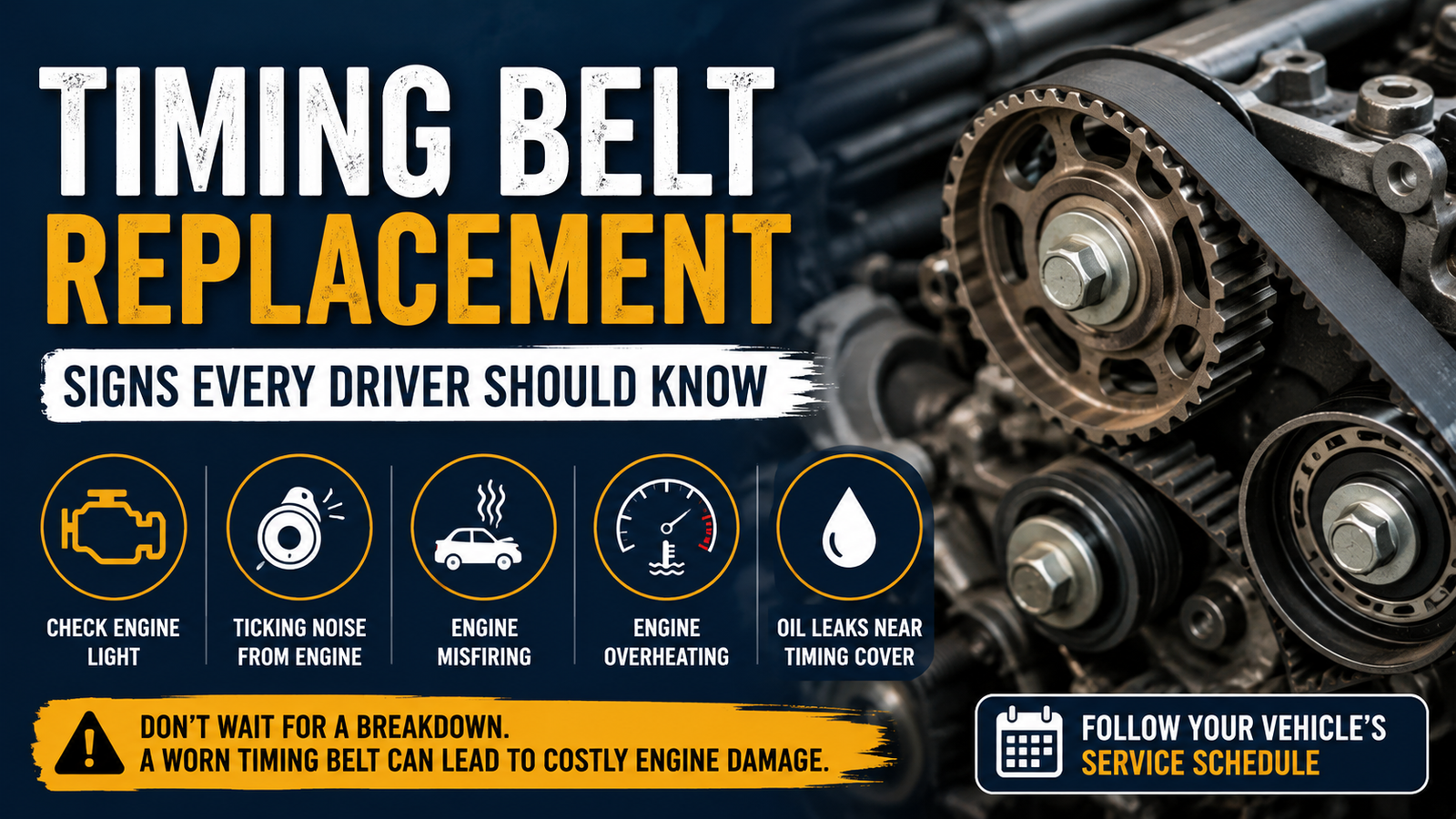
The ticking noise is usually the first thing drivers notice. A worn or loose timing belt produces a rapid ticking or slapping sound from the front of the engine. This noise tends to get louder as engine speed increases. This is one of the classic timing belt replacement signs.
Many drivers mistake it for a valve issue, but if the sound comes from the timing cover area, the belt deserves immediate inspection.
Rough idling is another early signal. A timing belt with worn teeth can skip a tooth on the camshaft sprocket.
When that happens, engine timing shifts slightly, and the idle becomes uneven or shaky. You might also notice the engine hesitating during acceleration. This symptom often appears before any visible damage occurs on the belt itself.
Misfires point directly to timing problems. If the belt stretches or slips, the camshaft no longer opens and closes valves at the right moment. Fuel and air enter the combustion chamber at the wrong time, causing incomplete combustion. Your check engine light will typically illuminate with misfire codes stored in the system.
Oil leaks near the timing cover deserve attention. Timing belt covers seal the belt away from engine oil.
These are bad timing belt symptoms to watch for before it becomes a big problem. When the seals on the camshaft or crankshaft wear out, oil seeps into the timing belt area. Oil contamination rapidly degrades rubber belts and accelerates wear. Any oil stain near the front of the engine warrants a closer look.
Hard starting or a no-start condition can also signal a bad timing belt. If the belt has already slipped significantly, the engine loses compression. You will hear the starter motor cranking without the engine firing. In the worst case, the belt has already snapped, and the engine will not turn over at all.
Smoke from the exhaust is a late-stage warning. When timing is off badly enough, unburned fuel exits through the exhaust and creates visible smoke. By this point, the belt needs replacement immediately. Continuing to drive risks complete engine failure.
When to Replace the Timing Belt Based on Mileage and Age
Most manufacturers recommend timing belt replacement between 60,000 and 100,000 miles. Time matters just as much as mileage. Rubber degrades with age, even if the car sits in a garage.
Most mechanics recommend replacing a timing belt every five to seven years, regardless of how many miles it has covered. A ten-year-old belt with 40,000 miles on it carries the same failure risk as a high-mileage belt on a well-driven car.
Heat and oil exposure speed up belt degradation significantly. Engines that run hot regularly or that have minor oil leaks near the timing cover will wear through a belt much faster than the standard interval suggests.
If your car runs in extreme climates or sees a lot of stop-and-go city traffic, lean toward the lower end of the replacement range.
Replacing the water pump at the same time makes financial sense. The water pump sits in the same area as the timing belt on most engines, and the labor to access it is already paid for during a belt replacement.
A new water pump adds relatively little cost but eliminates the risk of having to pull everything apart again shortly afterward.
Tensioners and idler pulleys should also come out during a timing belt job. These components put constant pressure on the belt. A worn tensioner that fails after a fresh belt installation will destroy the new belt quickly. Reputable shops replace all three components together as a kit.
FAQs About Timing Belt Replacement
What are the signs that your timing belt needs to be changed?
Watch for ticking or slapping noises from the engine front, rough idle, engine misfires, oil leaks near the timing cover, hard starting, and smoke from the exhaust. Any of these symptoms warrants a timing belt inspection right away. Do not wait for multiple symptoms to appear before acting.
Can you tell if a timing belt has been replaced?
A mechanic can inspect the belt visually for wear indicators, cracking, or glazing that suggest age. Service records provide the clearest confirmation. Many shops mark the belt with the mileage and date of installation. If you bought a used car without service records, have a trusted mechanic pull the timing cover and assess the belt condition directly.
What is the warning sign of a timing belt?
The most recognizable warning sign is a ticking or rattling noise from the front of the engine, especially at startup. Engine misfires and a rough idle are close behind. A check engine light with timing or misfire codes also points directly at the belt. Any one of these signs is enough reason to schedule an inspection immediately.
Conclusion
Timing belt replacement is one of the most important maintenance jobs your car needs, and the signs of a failing timing belt are clear once you know what to look for. A ticking noise, rough idle, misfires, oil leaks near the timing cover, or hard starting all deserve immediate attention. Replacing the belt on schedule costs a few hundred dollars. Ignoring it can cost you an engine.
The team at Claymont Auto brings honest, experienced service to every timing belt job. Visit claymontauto.com to schedule an inspection or call ahead for same-day availability.