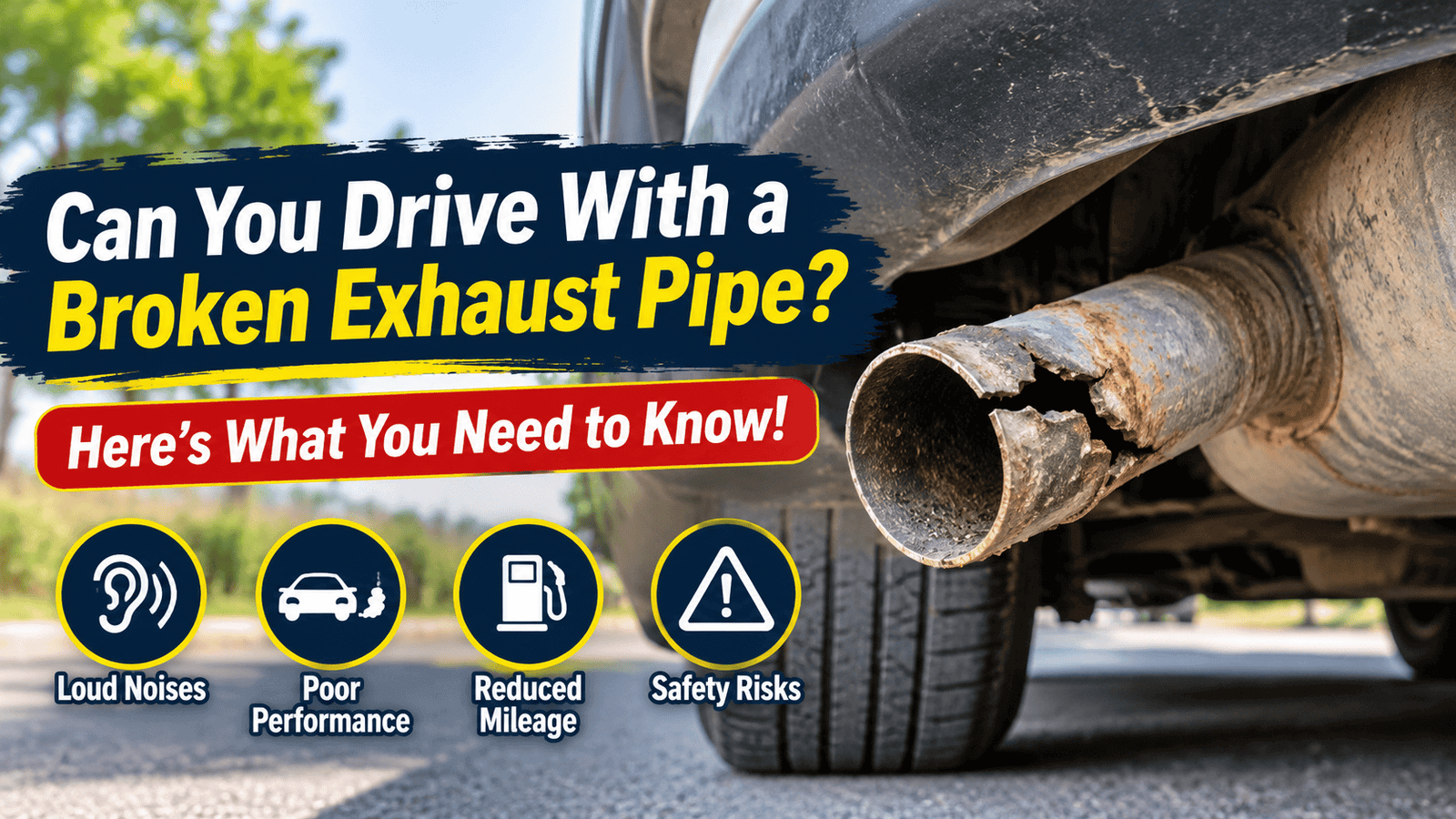
When your car starts sounding like a heavy-duty race truck every time you step on the gas pedal, something under the chassis may have gone wrong. A loud roaring noise, a vibrating floorboard, or the sharp smell of exhaust fumes could point to a failing muffler or another exhaust system problem.
A broken exhaust system can draw unwanted attention from local police. But the problems go further. Depending on the damage, a failing exhaust system may affect vehicle performance or allow harmful exhaust gases to escape through leaks.
When you face this kind of underbody damage, your first thought is almost always financial. Drivers want to know what kind of bill they are looking at before they head to the garage.
Understanding the typical muffler replacement cost is valuable. It helps you budget properly and avoid paying for unnecessary repairs.
Here is a breakdown of what you can expect to pay, how repair options compare to full replacements, and what factors influence the final bill.
What Goes Into the Final Bill
Exhaust components take a massive beating every single day. They sit just inches off the ground and endure constant exposure to road salt, standing water, and gravel. Extreme temperature changes also contribute to wear, especially during cold winters.
Over time, rust can eat through the outer shell, and internal baffles can deteriorate. When you ask a technician about the muffler replacement cost, the price rarely consists of just a flat parts fee. Several variables shape the total estimate:
A standard economy sedan typically uses a straightforward, mass-produced muffler that may be less expensive to replace. Luxury imports, sports cars with dual-exhaust setups, and heavy-duty trucks are different. They may require specialized parts that drive up expenses.
OEM stands for Original Equipment Manufacturer. These replacement parts are made to meet the vehicle manufacturer’s specifications and often cost more. Aftermarket alternatives may offer a budget-friendly option, though quality can vary.
If a muffler is bolted on with standard clamps, replacing it may take less time. However, if years of road rust have fused the pipes or the components require precision welding, labor costs can increase.
Muffler replacement costs vary depending on the vehicle, replacement parts, labor requirements, and the condition of the surrounding exhaust components. A mechanic can provide a more accurate estimate after inspecting the damage.
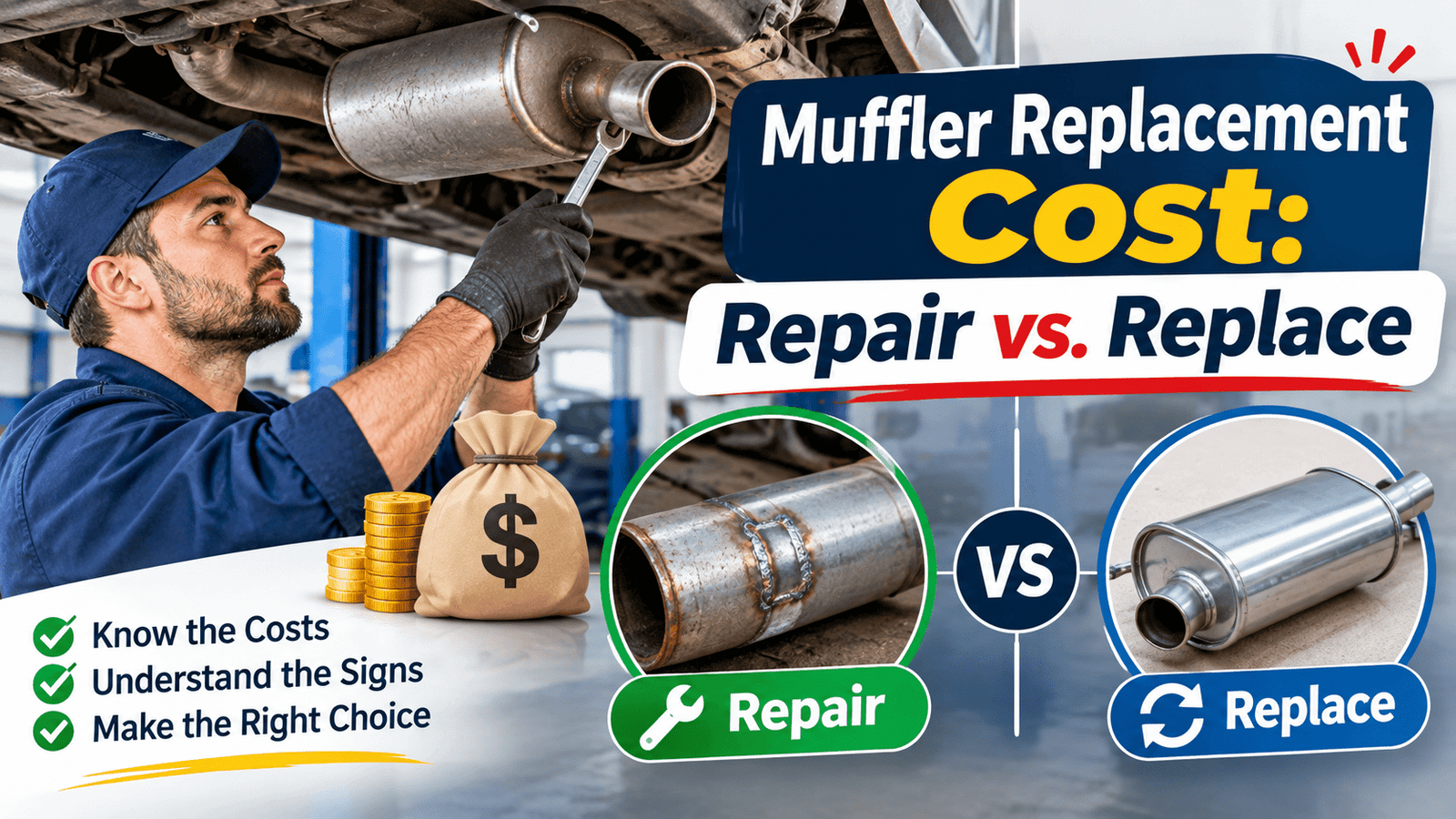
Repairing Versus Replacing Your Exhaust
Many car owners wonder if they can repair a damaged exhaust component without purchasing a brand-new replacement. The answer depends on where the damage is and how severe it is.
Small cracks or isolated holes may be repairable if the surrounding metal is still strong enough. However, extensive rust or corrosion may make replacement the safer option.
For minor damage, a technician may clean the affected area and weld a patch over the damaged section. Small cracks may also be temporarily repaired using exhaust putty or high-temperature repair tape, depending on the location and condition of the component.
But if the internal baffles have deteriorated or the outer casing is severely corroded, patching may not be worth the money.
A compromised muffler may no longer reduce engine noise effectively or contain exhaust gases properly. In those cases, replacing the damaged muffler is usually more practical than attempting repairs.
Frequently Asked Questions
Can a muffler be repaired instead of replaced?
Yes, a muffler may be repairable if the damage involves a small crack, an isolated hole, or a loose mounting bracket.
A mechanic may be able to weld a patch over a damaged section or repair the mounting hardware. However, if the metal is heavily corroded or the internal components have deteriorated, replacement is generally the better option.
Is replacing a muffler easy?
Muffler replacement isn’t always as easy as turning a few bolts, particularly on older cars. Years of heat exposure and road salt can cause pipes and fasteners to rust or seize.
Removing the old unit may require cutting or grinding rusted components. Depending on the vehicle’s exhaust design, installing the replacement muffler may involve clamps, bolts, or welding to create secure, leak-free connections.
Is muffler replacement necessary?
Not always. Minor damage may be repairable, but a muffler with extensive corrosion, structural damage, or failed internal components generally needs replacement.
A damaged muffler or leaking exhaust system may also cause your vehicle to fail a safety inspection. An inspection can help determine whether repair or replacement is appropriate.
Red Flags to Watch Out For With Exhaust Quotes
Exhaust work is performed beneath the car, making it difficult for most drivers to see the damage themselves. This can make it harder to judge whether a recommended repair is necessary.
Be cautious if a shop immediately recommends replacing the entire exhaust system, from the engine manifold to the tailpipe, for what appears to be a minor rear muffler problem.
While corrosion can affect multiple exhaust components, a reliable repair shop should explain which sections are damaged and why they need attention.
The technician should also discuss whether replacing individual damaged components is possible. Always request a breakdown of parts and labor costs before approving any work.
Getting Professional Exhaust Service in Claymont
A noisy exhaust may indicate a damaged muffler, loose components, or leaks elsewhere in the exhaust system. Having the problem inspected early can help identify the affected parts before additional damage develops.
At Claymont Auto Repair, our team can inspect your exhaust system, identify damaged components, and recommend appropriate repair or replacement options. You’ll receive an estimate based on your vehicle’s condition and the work required.
If your vehicle sounds louder than usual or you suspect an exhaust problem, visit Claymont Auto Repair at 3506 Philadelphia Pike, Claymont, DE, for a professional inspection.