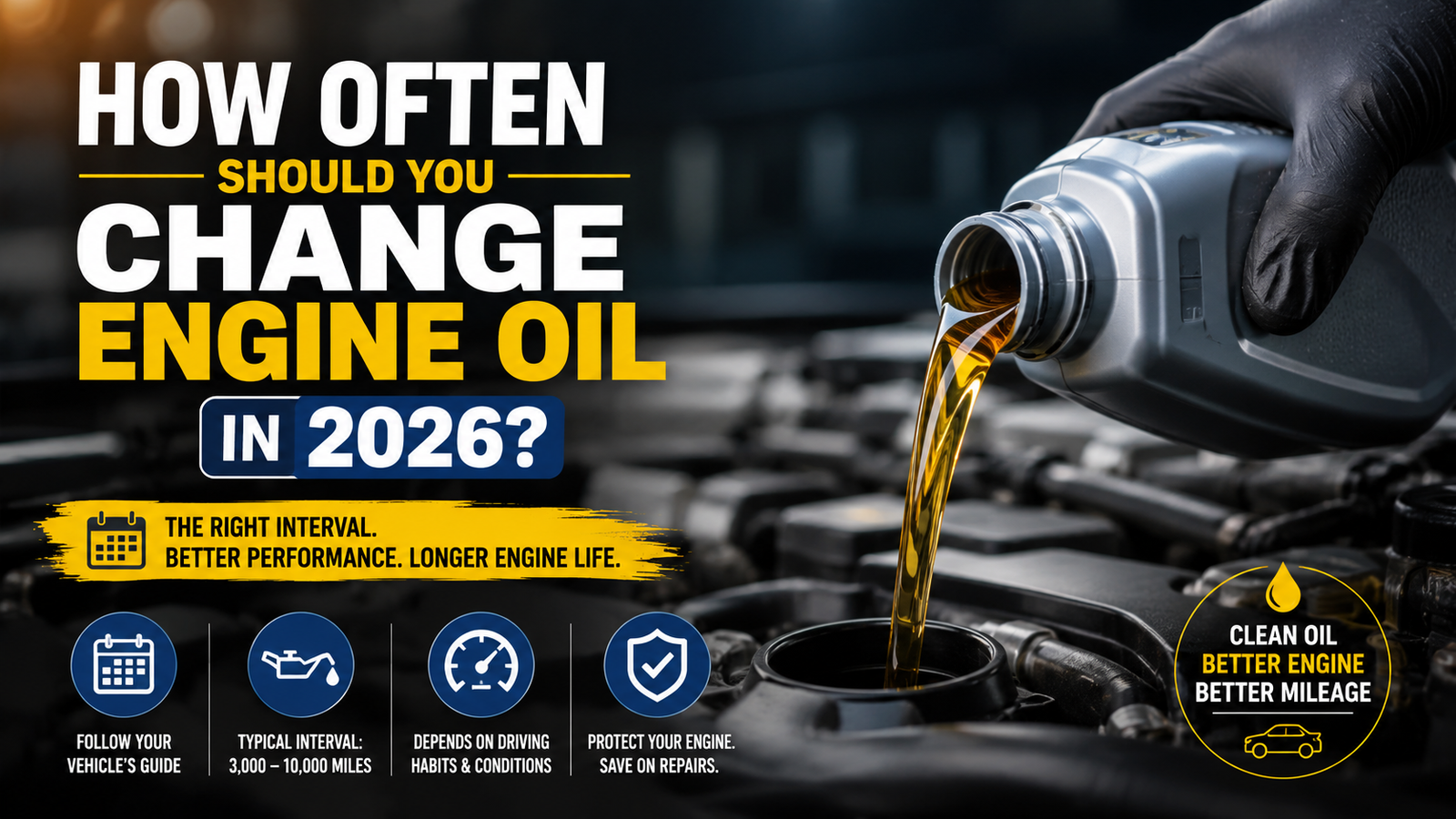
If you’ve ever stared at your dashboard wondering whether that oil change reminder is really urgent or just being dramatic, you’re not alone. It’s one of the most common questions we hear from drivers in Claymont, Wilmington, and Newark. The answer is not as simple as “every 3,000 miles” anymore. Modern engines and better oils have pushed that number way past what most people grew up hearing. This guide explains how often to change engine oil, what affects that timeline, and how to tell when your car is overdue.
A lot of the confusion comes from old habits. The “3,000 mile rule” was accurate for cars built decades ago running conventional oil, but today’s engines, oils, and computer systems have moved well past that. Some vehicles can now comfortably go 10,000 miles between changes, while others still need attention closer to the old standard. The right number depends on your specific car, the oil in it, and how you actually drive it, not a generic sticker in your windshield.
Why Regular Engine Oil Changes Matter
Engine oil does real work every second your car is running, and skipping changes catches up with you faster than most people expect.
- Engine protection: Motor oil coats moving parts and prevents metal-on-metal contact, which is what keeps your engine from grinding itself apart.
- Better fuel efficiency: Clean oil reduces friction, which means your engine doesn’t have to work as hard to move, and that shows up at the pump.
- Longer engine life: Regular oil changes are one of the cheapest ways to add years to your engine’s lifespan.
- Improved performance: Fresh oil keeps engine lubrication consistent, so acceleration and overall drivability stay smooth.
Think of it like this: oil is the one component doing the most work while getting the least credit, until it’s neglected, and then it’s the reason for a very expensive repair bill.
How Often Should You Change Engine Oil?
The honest answer is: it depends on the type of oil in your engine. Conventional oil, synthetic blend, and full synthetic oil all break down at different rates, so their recommended mileage intervals aren’t the same.
As a general rule of thumb, here’s how the three main oil types compare.
| Oil Type | Recommended Interval | Best For |
| Conventional Oil | 3,000–5,000 miles | Older vehicles, simple engines, budget-conscious drivers |
| Synthetic Blend | 5,000–7,500 miles | Daily drivers wanting a balance of protection and cost |
| Full Synthetic Oil | 7,500–10,000 miles | Newer vehicles, high-performance engines, extended-life needs |
These are general guidelines, not gospel. Your owner’s manual is the real authority here, since vehicle manufacturer recommendations account for your engine’s specific design and tolerances.
It also helps to understand why the intervals differ so much. Conventional oil is made from refined crude, and it breaks down faster under heat and friction. Synthetic blend oil combines conventional oil with synthetic additives. It offers better protection than conventional oil without the full cost of full synthetic. Full synthetic oil is engineered to resist breakdown. That is why it lasts longer between changes. If you’re not sure what’s currently in your engine, that’s one of the first things we check during a service visit, since it changes the whole conversation about timing. A typical synthetic oil change interval ranges from 7,500 to 10,000 miles, although your owner’s manual and driving conditions should always determine the right schedule for your vehicle.
Engine Oil Change Interval by Vehicle Brand
Different automakers recommend different oil change intervals. These intervals depend on engine design and the vehicle’s oil life monitoring system. Here’s a general look at what major brands typically recommend, though you should always confirm with your owner’s manual or a service advisor.
- Toyota: Most models with full synthetic oil are rated for around 10,000 miles, tracked through Toyota’s oil life monitor.
- Honda: Typically recommends 7,500 to 10,000 miles on full synthetic, adjusted by the Maintenance Minder system based on driving conditions.
- Ford: Many newer models call for synthetic oil changes around every 7,500 to 10,000 miles, though turbocharged engines sometimes run shorter intervals.
- Chevrolet: GM’s oil life system often stretches to 7,500 miles or more on synthetic, but it adjusts down for severe driving conditions.
- Nissan: Many newer models using full synthetic oil can go between 5,000 and 7,500 miles or longer, depending on the model and maintenance schedule.
The takeaway: don’t assume every car follows the same schedule. Two vehicles sitting side by side in a driveway could have completely different intervals depending on engine type and manufacturer calibration.
We see this play out often. A customer recently brought in a Honda Accord and a Ford F-150. Both were due for service at around the same mileage. However, they needed different oil change schedules because of their engine types and driving conditions. The F-150 was regularly used for towing, so we recommended shorter oil change intervals than the standard schedule. That’s a good reminder that the printed schedule is a starting point, not the final word.
Factors That Affect Oil Change Frequency
Mileage alone doesn’t tell the whole story. A handful of real-world factors can shorten how long your oil actually lasts, even if the odometer hasn’t hit the recommended number yet.
● Driving habits: Aggressive acceleration and hard braking put more stress on the engine and break down oil faster.
● Stop-and-go traffic: Idling and frequent starts and stops, common on I-95 through Wilmington, are harder on oil than steady highway driving.
● Climate: Extreme heat or cold changes oil viscosity and can accelerate breakdown.
● Vehicle age: Older engines tend to burn oil faster and may need more frequent checks between changes.
● Engine type: Turbocharged and high-performance engines generally run hotter, which shortens oil life.
● Manufacturer recommendations: Always the baseline, but they assume average conditions, not severe driving conditions.
If your daily routine includes a lot of short trips, towing, or stop-and-go commuting, you likely fall into the “severe driving conditions” category, which usually means shorter intervals than the standard chart suggests.
Short trips deserve a special mention here. An engine needs to reach full operating temperature to burn off condensation and fuel residue that build up inside it. If most of your trips last only five minutes, the engine may not fully warm up. That allows condensation and fuel residue to mix with the oil and speed up its breakdown. Drivers with a short commute often assume low mileage means less wear, when in some cases it actually works against them.
Signs Your Car Needs an Oil Change
Your car will usually give you a heads-up before things get serious. Common signs you need an oil change include:
- Oil warning light: If the oil-pressure warning light comes on, pull over safely and turn off the engine. Continuing to drive could cause serious damage.
- Dirty oil: Oil that feels gritty, looks sludgy, or is below the proper level should be checked. Dark color alone does not always mean the oil needs immediate replacement.
- Engine knocking: A ticking or knocking sound often means parts aren’t getting proper lubrication.
- Burning smell: This can indicate oil is leaking onto hot engine components.
- Reduced fuel economy: A sudden drop in mpg can point to oil that’s no longer doing its job efficiently.
- Excess exhaust smoke: Bluish or gray smoke can be a sign oil is burning inside the engine.
If you notice several of these signs, schedule a service visit soon. None of these signs are things to wait out. Engine knocking in particular should never be ignored. It can point to low oil, poor lubrication, or another mechanical problem that needs prompt attention. Every mile you continue driving can make the damage worse.
What Happens If You Delay an Oil Change?
Putting off an oil change might feel harmless in the moment, but the consequences build up quietly until they don’t.
● Engine wear: Old oil loses its ability to protect moving parts, leading to gradual metal-on-metal damage.
● Sludge buildup: Oil that breaks down can thicken into sludge, clogging passages and restricting flow.
● Overheating: Poor lubrication means more friction, and more friction means more heat.
● Reduced engine life: Consistent neglect shortens your engine’s overall lifespan, sometimes by years.
● Expensive repairs: What starts as a routine maintenance item can turn into an engine rebuild or replacement, which costs thousands more than a simple oil change ever would.
In many cases, a timely engine oil replacement can prevent unnecessary engine wear and help you avoid much more expensive repairs later on.
Checking Your Oil Between Changes
You don’t have to wait for your next scheduled service to know how your oil is doing. A quick check between visits can catch problems early and give you a better sense of when you’re actually due.
One of the simplest car maintenance tips is to check your oil level regularly instead of waiting for the next scheduled service.
● Check the dipstick when the engine is cold, and the car has been parked on level ground for at least a few minutes.
● Look at color and texture; fresh oil is often amber, but it can darken during normal use. Pay closer attention to a gritty texture, sludge, a low oil level, or an overdue service interval.
● Check the level along with the condition, since low oil can point to a leak or a car that’s burning oil faster than normal.
● Pay attention to your oil life monitoring system, but don’t treat it as the only signal, especially if you’ve noticed any warning signs already.
If anything looks off, or you’re just not confident reading the dipstick yourself, it takes our team about five minutes to check it for you during a routine maintenance visit.
Engine Oil Change Mileage Chart
Here’s a quick-reference chart you can save for later. It lines up with the general intervals covered above, so you can check it at a glance without digging through your owner’s manual.
| Oil Type | Recommended Mileage |
| Conventional | 3,000–5,000 miles |
| Synthetic Blend | 5,000–7,500 miles |
| Full Synthetic | 7,500–10,000 miles |
Professional Oil Change Services in Claymont, DE
If you’re not sure which oil type or interval fits your vehicle, our team at Claymont Auto Repair can check your owner’s manual, inspect your current oil condition, and recommend a schedule that matches how you actually drive. We work with drivers throughout Claymont, Wilmington, and Newark, and we always explain what we find instead of simply handing you a bill.
Whether you need a routine oil change service or want a second opinion on when your next one is due, we’re happy to help.
Oil changes also give us a chance to take a broader look at your vehicle’s condition. If you need an oil change Claymont, DE, our team can also check your fluid levels, filters, and other routine maintenance items during the same visit.
Conclusion
When deciding how often to change engine oil, consider your oil type, driving conditions, owner’s manual, and vehicle manufacturer’s recommendations. Conventional oil needs more frequent attention, synthetic blends split the difference, and full synthetic oil buys you the most mileage between visits. Whatever schedule your vehicle requires, follow it consistently. Regular oil changes help protect the engine and prevent costly repairs.
If it’s been a while since your last oil change, or you’re just not sure where you stand, reach out to our team, and we’ll help you figure it out.
Frequently Asked Questions
1. How often should engine oil be changed?
It depends on the oil type: conventional oil every 3,000 to 5,000 miles, synthetic blend every 5,000 to 7,500 miles, and full synthetic oil every 7,500 to 10,000 miles. Always check your owner’s manual for your vehicle’s specific recommendation.
2. How many miles can synthetic oil last?
Full synthetic oil typically lasts between 7,500 and 10,000 miles, and in some vehicles with advanced oil life monitoring systems, it can stretch even further under ideal conditions.
3. Can I wait 10,000 miles before changing my oil?
Only if your vehicle uses full synthetic oil and your manufacturer’s schedule supports it. Waiting that long with conventional or synthetic blend oil puts unnecessary strain on your engine.
4. What are the signs that my car needs an oil change?
Common signs include the oil warning light coming on, dark or gritty oil, engine knocking, a burning smell, reduced fuel economy, and excess exhaust smoke.
5. Does driving style affect oil change intervals?
Yes. Aggressive driving, frequent stop-and-go traffic, short trips, and towing all count as severe driving conditions, which typically shorten how long your oil lasts.
6. What happens if I don’t change my engine oil?
Old oil breaks down and loses its ability to lubricate, which leads to engine wear, sludge buildup, overheating, and eventually expensive repairs or engine failure.
7. Should I follow the oil life monitor?
Generally yes. Most modern oil life monitoring systems calculate wear based on actual driving conditions, which is often more accurate than a flat mileage number. That said, it’s still smart to have oil checked during routine maintenance visits.
8. How much does an oil change cost?
The cost depends on your vehicle, the type of oil it requires, and whether the oil filter is replaced at the same time. We’re always happy to provide an estimate before any work begins.